Beyond Donations: Suggestions from Youth to Make Aid for Haiti More Impactful
By Celine Liu
On May 31st, my fellow journalist and I, as youth journalists from middle and high schools, attended a charity event. The event, hosted by UNICEF Canada and Merit College, was held to raise money for the children in Haiti, to save them from the damage caused by the earthquake.
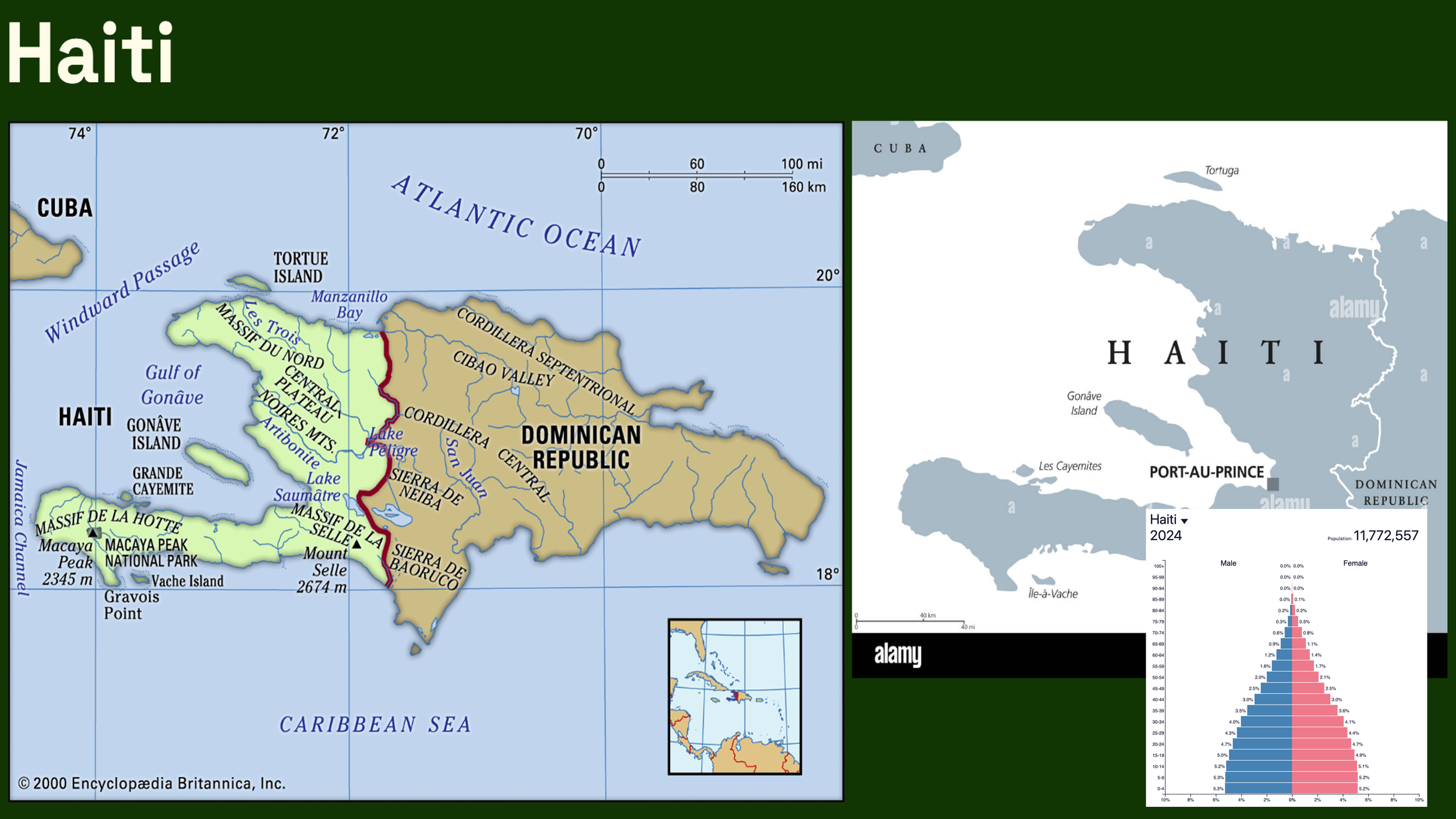
In recent years, frequent earthquakes, ongoing gang violence, and political instability have made survival incredibly dangerous for the children there. According to the reports from UNICEF, the devastating earthquake in 2021 damaged approximately 137,500 buildings, many of which remain unrepaired to this day. As of 2024, more than 125,000 children under the age of five are at risk of severe acute malnutrition. Additionally, violence and insecurity have affected 919 schools, impacting at least 50,000 students. A recent report shows that armed gangs have already taken 85% control of Port au Prince, the capital of Haiti, further deepening the humanitarian crisis.
Everyone at the event is working very hard for children in Haiti, however, my group and I realized that most young people my age do not know about the ongoing crisis. They don't even know where Haiti is. It is not because they don’t care, it is because they don’t know – before this event triggered their attention, they had no way of getting information.
In our school, there’s no mention of children in Haiti in the curriculum. We only study Canadian history and world history after the 15th century. Online, many of us are living in an information bubble, repeatedly seeing the same opinion thousands of times. Only something fierce, such as the situation of children in Gaza, can be sent to everyone’s news APP. As a result, issues such as poverty, malnutrition, violence, and the suffering of children in Haiti, or similar small countries, are invisible to many youth around the world.
If we want to raise money to help the children in Haiti, we first need to raise public awareness about Haiti. Global NGOs, such as UNICEF, could utilize their influence to do this more effectively. For instance, in our school board, we have morning announcements that update students on daily events. UNICEF could collaborate with school boards to include their news in these announcements, sharing real-world stories and global issues. This would help students stay informed and break the information bubble.
Moreover, UNICEF could have more educational programs to raise awareness of global issues such as the crisis in Haiti. In our geography class, we spent the whole semester learning about the UN Sustainable Development Goals (SDGs). Why not include what UNICEF has done and is currently doing as a part of this curriculum? Could we organize more activities in our school’s UNICEF club? What if every school had a bulletin board showing how children in other parts of the world are suffering? These things require less funding, yet they help more young people to understand global issues, and involve helping them in the future.
The above ideas require a long-term commitment and may take time to implement. Meanwhile, we can improve the effectiveness of each event in preparation.
During the interview, youth journalists learned that students from Merit College had started going door-to-door a full month before the charity night to raise funds for the recovery from the earthquake. When our group was writing the interview outline together, we found out that the problem in Haiti is not only about earthquakes. In the 18th century, Haiti used to be the richest colony in the world, and it was the first independent black nation in the Southern Hemisphere. However, we discovered that the heavy independence debt it paid to France and the lack of a government system made this country almost stop developing.
Widespread suffering, poverty, and starvation have led to the rise of extremists. After facing a lot of dictators, and irresponsible and unreliable governments, in the late 20th century, gangs started to take control of the country. To these gangs, violence is the only way to gain power and defend their territory. They keep using brutal methods to eliminate anyone different from them. The concept of democracy and the legal system are out of their head.
With further research, we identified that solving the current issue of Haiti requires a long and challenging effort. It is not only about rebuilding cities after earthquakes, it is about building a national system. People, especially children, need education to tell them how to negotiate. However, no one wants to go there, it is too dangerous. What people can do is only continue raising funds and sending them to Haiti. It’s like transfusing blood into someone who hasn’t stopped bleeding.
That day at the event, we had a feeling that people hadn’t truly engaged with the issue. There is a sense of superficiality there, full of empty slogans and sympathy from outsiders. So we couldn’t help but wonder – could we bring the deep complexity and real situation of the Haiti crisis to the event? Because it’s often the raw truth that touches people the most.
In our research, we learned that UNICEF has already done remarkable work in supporting children in Haiti. In collaboration with the Haitian government, UNICEF tries to prevent children from being recruited by armed groups; UNICEF provides psychosocial support to children; UNICEF supports the reconstruction of schools; and UNICEF assists vulnerable families in supporting children’s education. These are all vital efforts and deserve recognition.
Yet even with such a strong support system in place, the crisis remains. That’s why we believe that if we cannot change everything all at once, we can at least try to make each event we hold more meaningful and in-depth. Take the Haiti charity night for example, we can help people see that Haiti’s current crisis is about history, politics, and many other factors. When people understand the deeper causes and the real human suffering behind the headlines, they’re more likely to move – and more willing to donate.
Overall, many parents and children benefited greatly from this charity night. I am deeply grateful that UNICEF and Merit College have continued this annual event for more than a decade. This dedication has truly inspired me. Yet when we saw the suffering Haiti children in the video, we couldn’t stop asking ourselves: Can we do more than donate? Can we raise our voices, use our platforms, and help UNICEF tell these stories more effectively? If we want to get involved, what do you think we can contribute?
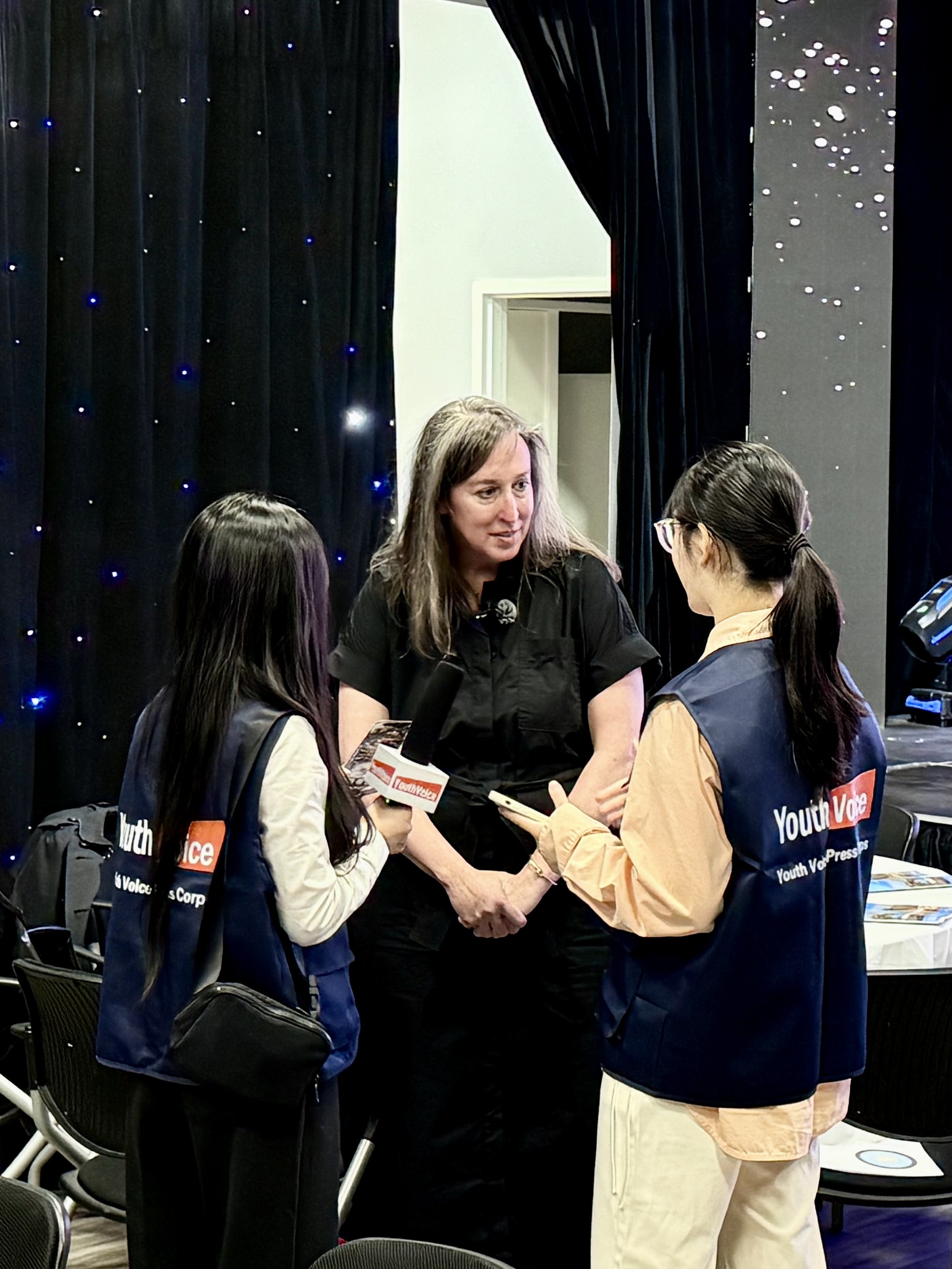
Celine Liu & Ivy Li did an onsite interview to Ms. Erin Baier, Vice President Development at UNICEF Canada
Thanks
I would like to thank UNICEF Canada and Merit College for organizing the charity event and giving us the opportunity to participate. Special thanks to my fellow team members David, Charles, and Frank, for their generous help and support during the writing of this article.
I would also like to extend my heartfelt thanks to Ms. Erin Baier for agreeing to our interview. Your extensive experience with UNICEF has inspired us to confront global challenges such as those faced in Haiti and to voice our own perspectives with courage.
I would like to express my special gratitude to Ms. Lu Jin. Without her continuous encouragement, it would have been difficult for me to begin writing articles related to international politics.
I would further like to offer my sincere appreciation to Ms. Fenghua Mu. It was the charitable dinner you organized that allowed us to connect with our peers and witness their willingness to contribute through community activities.
Author Bio
Celine Liu is a grade 10 student in Abbey Park High School. She enjoys singing, reading novels, and playing clarinet. Celine loves to debate and think about the value of one’s life.
