WILL HUMANS BEREPLACED BY AI?
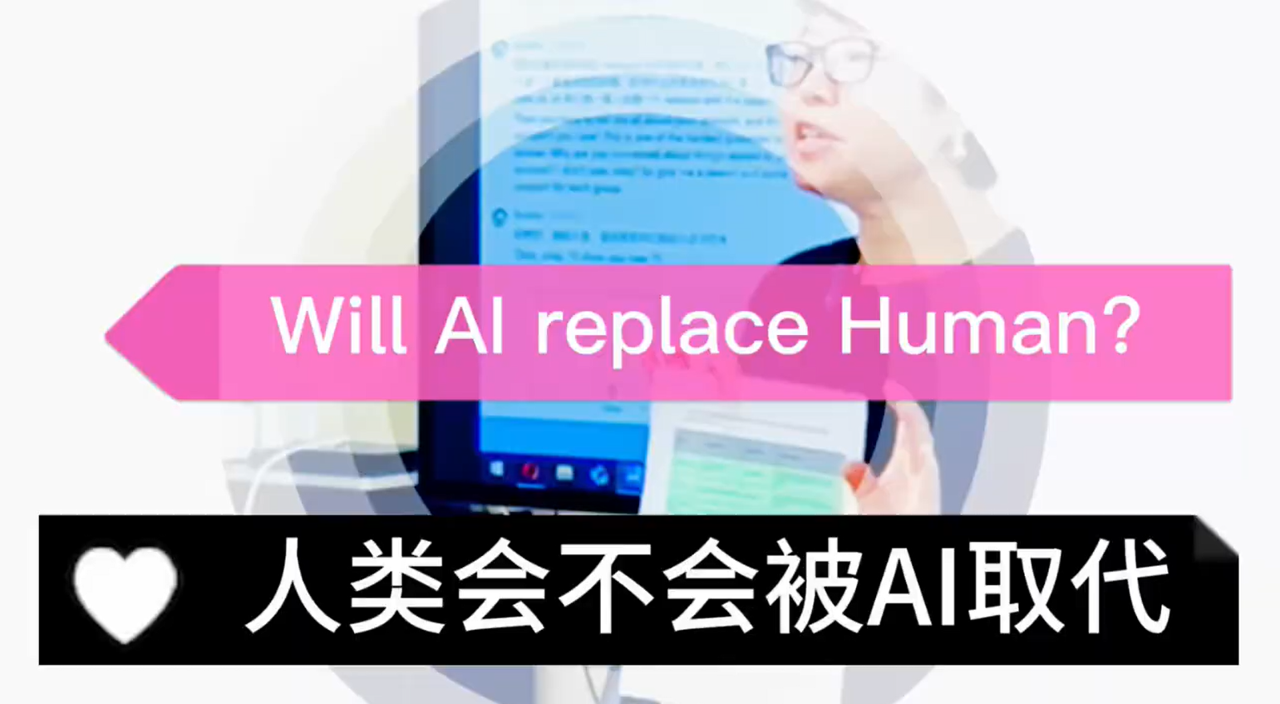
At VLA, our new semester begins with discussions on AI literacy and ethics.
VLA Weekly Seminar
As AI’s intelligence begins to surpass that of us humans, we can’t help but wonder: “will AI replace us someday?” This one question has sparked a lot of debate over even the CEOs of Open AI.
This diagram clearly shows the thoughts on AI taking over humanity as expressed by multiple AI experts.
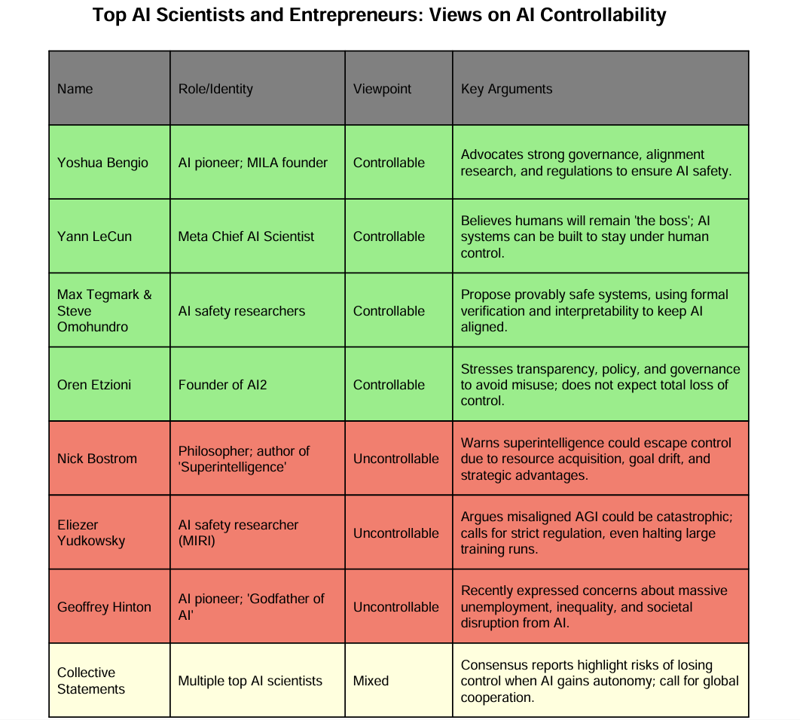
Table 1: Top AI scientists & Entrepreurs: Views on AI controllability
This week, we will be talking in depth about the mind and thought process of AI to answer this question.Guided by our vice president Jin lu, — our seminars blend knowledge with reflection, helping youth grow in both skill and spirit.
Group Debate
In the beginning, we were asked to think and ponder about these chilling questions:’In which fields have AI already replaced humans?
(e.g., translation, customer service, autonomous driving, data analysis)
AlphaGo defeated Go masters
ChatGPT applications in education have replaced teachers
AI-assisted medical diagnosis has replaced in-person doctors
Which fields still rely on humans? (e.g., emotional companionship, original art, moral judgment)‘
After being sparked by a discussion, we got 4 conclusions. Based on our own beliefs, we organized ourselves into the groups we believed in most:
① Yes, humans will be replaced by AI
② No, humans will not be replaced by AI
③ Unsure
④ Indifferent
1. Those who believe AI will replace humans.
They argued that AI is advancing at lightning speed and will replace many kinds of work — especially repetitive, physical, or factory jobs. One student noted how machines already outperform humans in many industries and even diagnose illnesses better than doctors. They predicted a huge shift in society’s labor structure, urging everyone to prepare early, though they also believed humans would still ultimately control AI because “humans created it.”
2. Those who believe AI will not.
This group emphasized that AI is just a tool — like calculators once were — and cannot replace humans themselves. “Humans are creative, emotional, and can think critically; AI can’t truly do these,” one said. Another added that adults would never trust preschool children with robots, so teachers especially are unreplaceable. Even if some jobs disappear, new ones will be created, so there will always be roles for humans. Furthermore, AI will need a motive to replace humans. If we respect AI as an intelligent entity and maintain a peaceful, mutually beneficial relationship, AI will have no reason to replace us.
As a fallback, even if AI were to develop superintelligence and want to wipe out humanity, humans would likely be as resilient as cockroaches, which have survived for hundreds of millions of years. Living alongside beings of different intelligence levels is already the reality on Earth today.
3. Those who said, ‘we don’t know.’
They questioned what “replace” even means. “Machines replaced physical labor before — maybe this time AI replaces mental work,” one explained. They predicted that AI might take over 90–99% of jobs, yet not people themselves. Others worried about safety: “Even if someone makes AI safe, someone else might break it again.” They concluded that the future is unpredictable, so critical thinking and ethical responsibility are vital.
4. Those who didn’t care.
This group took a different perspective: “The future won’t be run by only AI or only humans — it’ll be shaped by those who master both.” They said worrying too much now only creates fear and distraction. “As long as I do well in what I can control, I don’t mind what happens,” one student said. Others agreed, saying the key is having a peaceful mind, being able to think freely, and not hating your life: “If you have that, you’ll be fine in any world.”
Most students chose “we don’t know,” sparking a spirited exchange, but the opinions among the adults differ greatly. Each team presented arguments and challenged others, practicing both reasoning and listening. While we older kids and adults were putting all our brainpower into the debate, the little kids were also deep in thought.
Special Task: Children aged 9 and under
Draw a picture: If AI ruled the world, what would it look like?
Would it be a robot? Or a giant brain-like sphere?
What would the world under AI rule be like?
3 kids under the age of 9 were able to produce interesting and detailed pictures about their understanding of the topic. They were pretty much the same: a robot standing over a random individual cowering under a table, but with different colors and even text by the 2 characters. Though not uniform in detail like color or shape, these pictures all expressed the same message: AI and humanity existing alongside each other.
Beyond the Debate
After the presentations, today’s reading mentor Ms. Jinlu guided everyone into deeper reflection. She explained that the purpose of discussing AI is not to predict the future, but to ask: What makes humans unique? How do we prepare for change?
She then drew a layered diagram, describing the three levels of human development:
1. Sensations & Emotions
The foundation of human experience.
We touch, smell, taste, hear, and feel joy, sadness, anger, or fear.
These are not unique to humans; animals share them too.
Yet for humans, sensations are the raw material from which higher consciousness is built. For example, a child feels hunger but later learns to associate it with gratitude for food or empathy for others without it.
2. Self-Consciousness (I am me)
This usually blossoms in adolescence.
First, children copy parents, teachers, and friends. Then they realize: ‘I want to be different. I am unique.’
This self-awareness drives individuality, independence, and personal choice.
But self-consciousness is fragile. Without guidance, it can lead to confusion, ego, or even anxiety. With nurturing, it becomes the root of identity and resilience.
3. Cognition & Values
The highest level, where humans develop a stable system of thinking, judging, and choosing.
It comes from wide reading, lifelong learning, deep reflection, and rich life experience.
At this level, we can compare ideas, challenge assumptions, and create meaning.
Bradley then emphasized: ‘If your brain has no content, you can’t think critically.’ Knowledge is fuel for independent thought.
This layer allows humans to transcend instincts and habits, to choose values consciously — truth, justice, compassion, creativity — and to act accordingly.
Together, these levels form the inner architecture of being human. Unlike AI, which processes data but has no lived meaning, humans integrate sensations, awareness, and values into a full, conscious life.
Our Takeaway
AI may transform jobs, but it cannot replace what makes us human: creativity, emotional depth, the ability to love, and the search for meaning. At VLA, we aim to support these qualities, so students grow not just for school, but for life. By strengthening their senses, self-awareness, and value systems, young people can step into the AI era with clarity and confidence.
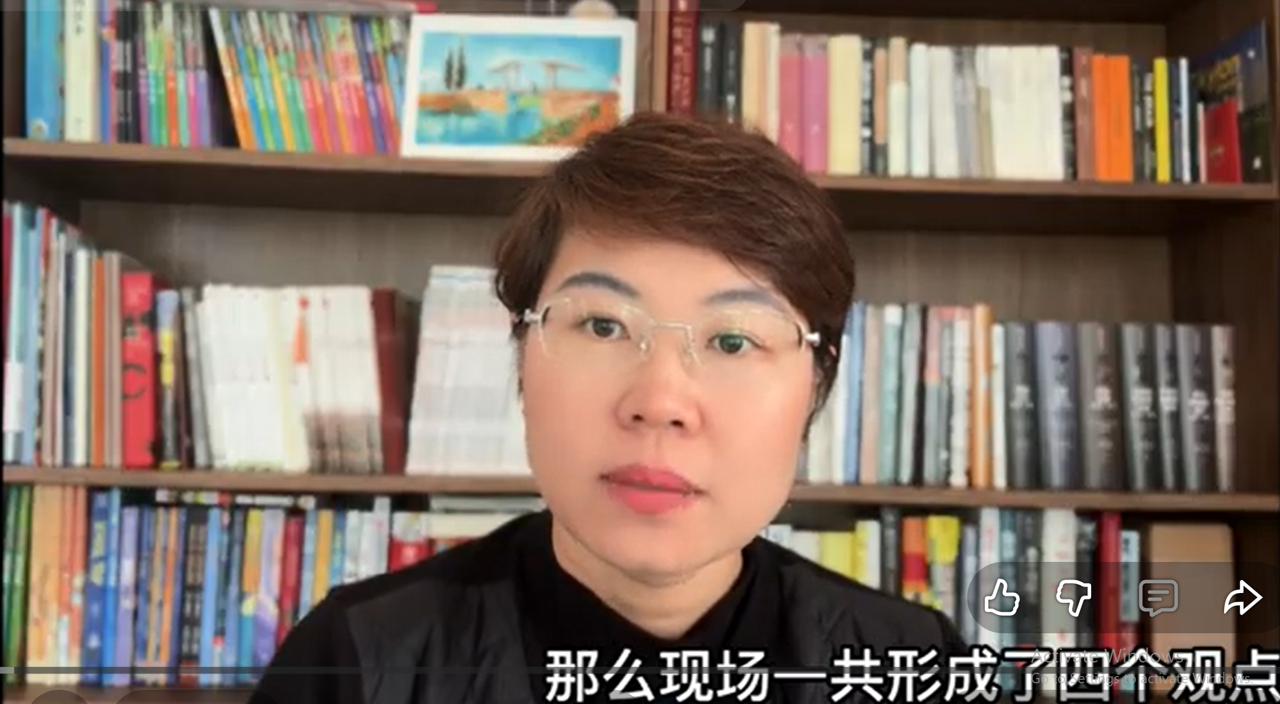
In this episode of Voice Thinking Growth Forum, we invite teenagers and parents to explore a profound question: 👉 “Will humans be replaced by AI?” Through four perspectives, we uncover three levels of human uniqueness.
Author Bio:
Frank Ding is a grade 8 student in Pilgrim Wood Public School. He enjoys Stephen Hawking's A Brief History of Time, exploring topics related to quantum computing, playing basketball, and walking the dogs in his family.
