Language, Culture, and Identity: How Chinese Newcomer Adolescents Navigate Life in Canada
Based on an original social research report by Celine (Puyu Liu), Chair of VLA Youth Committee. Why did a highschool student conduct this research?
In today’s era of rapid globalization, more Chinese families are choosing to immigrate, and adolescents often become the most vulnerable yet least understood participants in this transition. In this research project, VLA Youth Committee member Celine examines the integration experiences of Chinese newcomer adolescents aged 12–18 in Canada. As both a researcher and a peer within this community, she offers a rare insider–outsider perspective that brings clarity, nuance, and emotional truth to the challenges newcomer youth face.

This report is not only about language or culture—it is about identity, belonging, and the quiet emotional battles young immigrants navigate every day.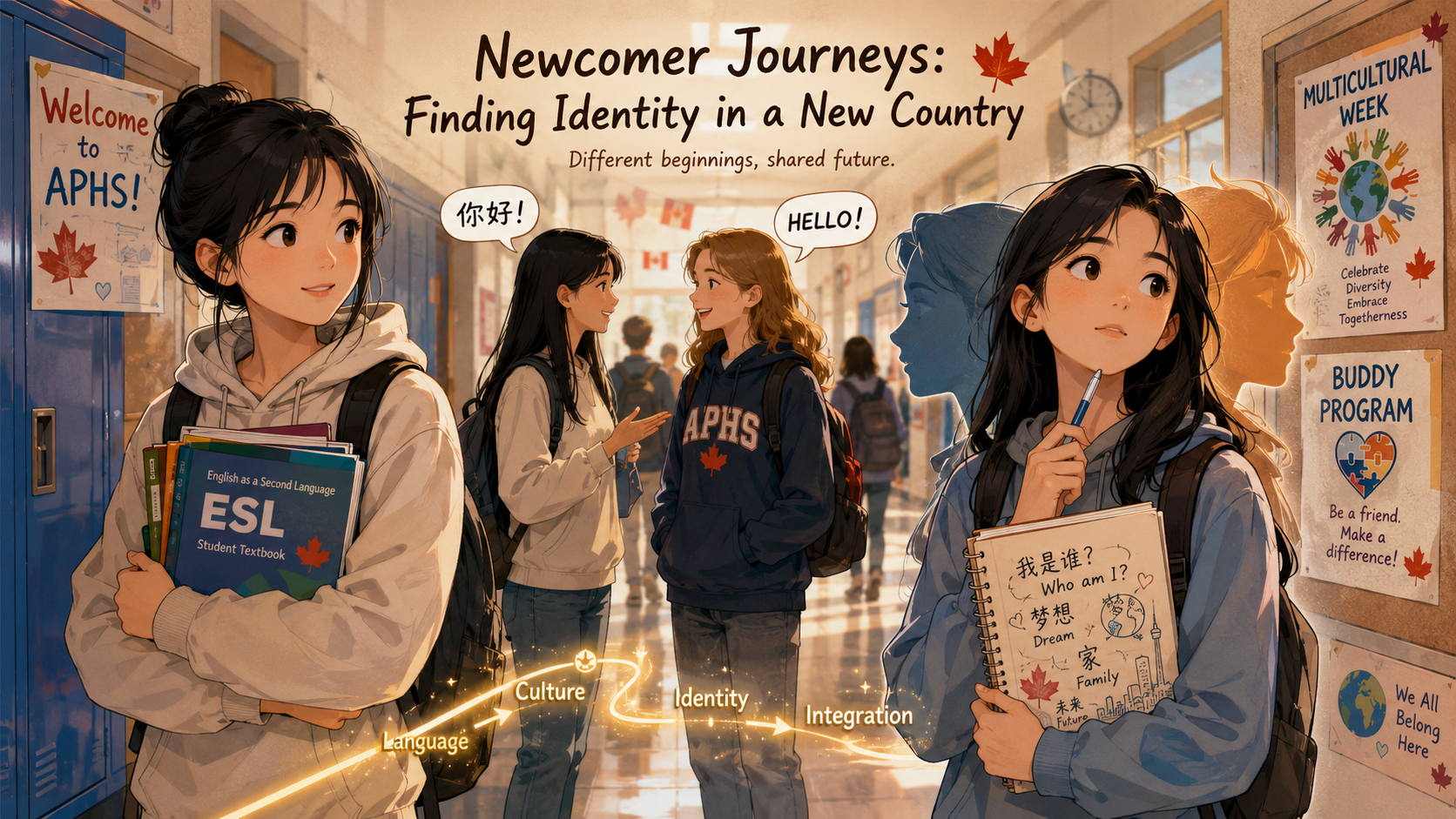
Newcomer teens in a Canadian school——Generated by ChatGPT
Challenges experienced among the newcomer youth
1. Language Barriers: The First and Most Immediate Challenge
Survey data from the study show that two-thirds of Chinese newcomer adolescents are placed in ESL programs during their first year. While ESL provides essential support, the gap between classroom English in China and everyday English in Canada creates significant stress.
One participant shared:
“After the first semester, I found myself becoming more introverted… I often cannot understand what my teachers and peers are saying.”
Language challenges quickly evolve into communication barriers, limiting social participation and increasing anxiety. Many adolescents reported feeling isolated or hesitant to speak, fearing misunderstanding or judgment.
2. Friendship Formation: Easy to Start, Hard to Deepen
The report reveals a striking pattern:
86.7% of newcomer adolescents make at least one new friend within a month, yet 70% of their close friends remain Chinese or Canadian-born Chinese.
This suggests that while initial social contact is easy, building deeper cross-cultural friendships is much harder. Interviews highlight two major factors:
English proficiency
Personality differences (introversion vs. extroversion)
Some adolescents described uncomfortable or unequal interactions with peers. One Grade 9 student recalled a classmate taking over her project topic “without discussion and in an impolite manner.” These subtle experiences reflect the social vulnerability newcomers may feel in unfamiliar environments.
3. Emotional Variations: Anxiety, Stress, and Self-Doubt
More than half of surveyed adolescents reported frequent anxiety, and about one-third experienced depression, stress, or loneliness. These emotions often stem from:
Language uncertainty
Academic pressure
Family expectations
Social comparison with local peers
One interviewee expressed self-blame for not improving English “fast enough,” while another worried whether her friends “truly liked her.” These emotional fluctuations are common during cultural transitions and often occur without clear external triggers.
4. Identity Conflict: Navigating Two Value Systems
Perhaps the most profound insight in the report is the tension between the “Chinese value system” adolescents grew up with and the new value system they begin developing in Canada.
In China, many teens grow up with a structured, achievement-oriented framework. In Canada, they suddenly encounter more freedom, more leisure time, and a more holistic approach to personal development.
One interviewee described receiving a level of freedom she “could not even imagine in China,” leaving her unsure how to use it.
Another participant felt “shameful” describing himself as Canadian in Mandarin, revealing how identity shifts can be tied to language and cultural context.
These internal conflicts often surface indirectly—through emotional stress, family tension, or feelings of disconnection.
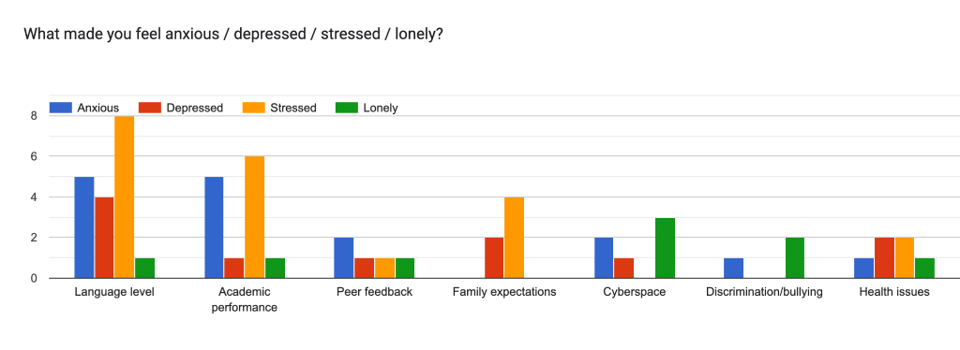
A graph in this research report about emotional variation.
Who is the target reader of this report?
This study offers valuable insights for:
Educators seeking to understand newcomer students’ academic and emotional needs
Parents navigating cultural and generational transitions with their children
Policymakers designing youth settlement programs
Community organizations supporting immigrant families
It highlights not only the challenges but also the resilience, adaptability, and diversity among Chinese newcomer adolescents.
The report concludes with practical recommendations, including strengthening ESL and peer mentorship programs, and creating more newcomer-focused community activities to foster social integration.
Comments from readers in VLA Parent Salon
“This research report is a great effort, especially for a high‑school student, but there are still some areas that could be improved. The number of people interviewed and surveyed is quite small, so the results may not represent all Chinese newcomer teens in Canada. The report also does not clearly explain how the participants were chosen, which makes the research less formal.”
“Some parts mix personal feelings with research findings, which can make the analysis less objective. The writing is thoughtful, but sometimes the ideas repeat or feel a bit long, so the structure could be clearer. Finally, the report would be stronger if it connected the findings to existing research or theories about immigration, culture, or teen development.”
“This research report is impressive because the author designed, carried out, and wrote everything independently. It shows a high level of responsibility and creativity for a high‑school student.”
“She taught herself how to create surveys, conduct deep interviews, and even organize focus group discussions. These are real social‑research skills that many adults do not practice. Her curiosity and willingness to explore make this project very special.”
The survey of this research has been executed from May 2025 - August 2025. 