Brainstorming: The Art of Conversing with AI
Nov 2nd, 2025
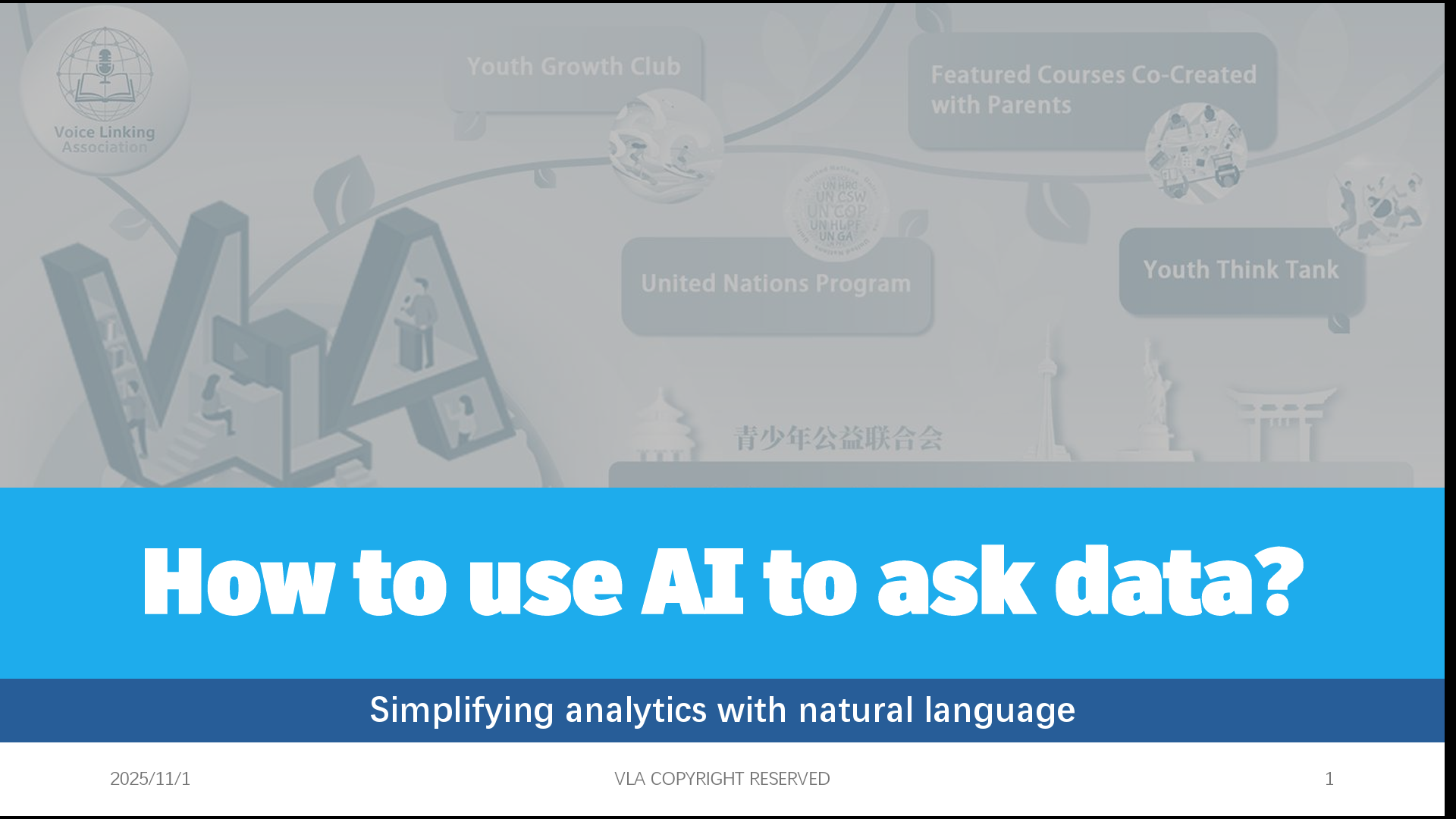
Every Sunday, members of Voice Linking gather as scheduled. The activity on November 2, 2025, was particularly special—a session designed to broaden our perspectives and enhance our understanding. Centered on artificial intelligence, the event combined theoretical lessons with hands-on practice on how to use prompts effectively. Our familiar mentors, Mr. Borui and Ms. Yewen, guided us through an inspiring brainstorming journey, exploring the question: How can humans collaborate with AI in a smarter and more effective way?

The first topic was “Prompt Engineering” . Mr. Borui opened with a classic AI training tongue-twister: “Facing each other while eating noodles, back-to-back while scrubbing backs.” He asked us whether an AI would be confused by such a sentence, and how scientists train AI so it doesn’t get confused. His question instantly captured our attention—how exactly does an increasingly intelligent AI learn to grasp the subtle nuances and playful intricacies of human language?

We learned that communicating with AI is not a one-off action, but a gradual, step-by-step process. Mr. Borui encouraged us to pay attention to how we interact with AI—rather than asking a huge question all at once, it is far more effective to guide the conversation progressively, provide context, and clearly express our intentions. A well-structured dialogue leads to smoother communication and far more accurate results.
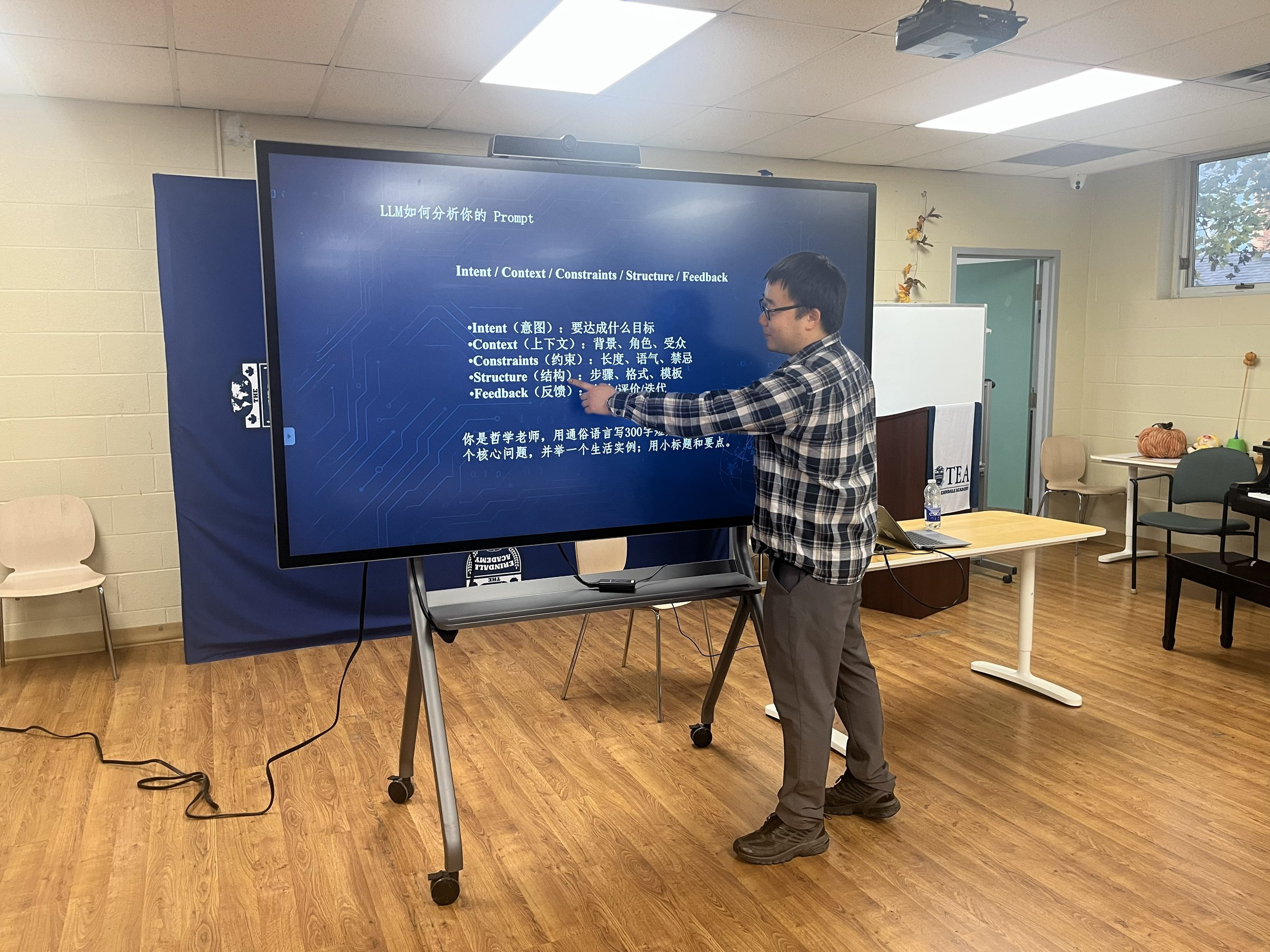
Once we had a solid grasp of the theoretical foundations of AI prompting, Ms. Yewen immediately led us into hands-on practice: How do we ask questions in a way that enables AI to generate meaningful data insights?
We realized that “asking AI for data insights” is not as simple as posing a single question. It requires clear descriptions, an understanding of existing information, and a defined objective. The more structured and logical the question, the more aligned and commercially valuable the AI-generated insights become. Ms. Yewen summarized the rules for querying data through AI into a three-step method and gave it a memorable name—the DIG Action.
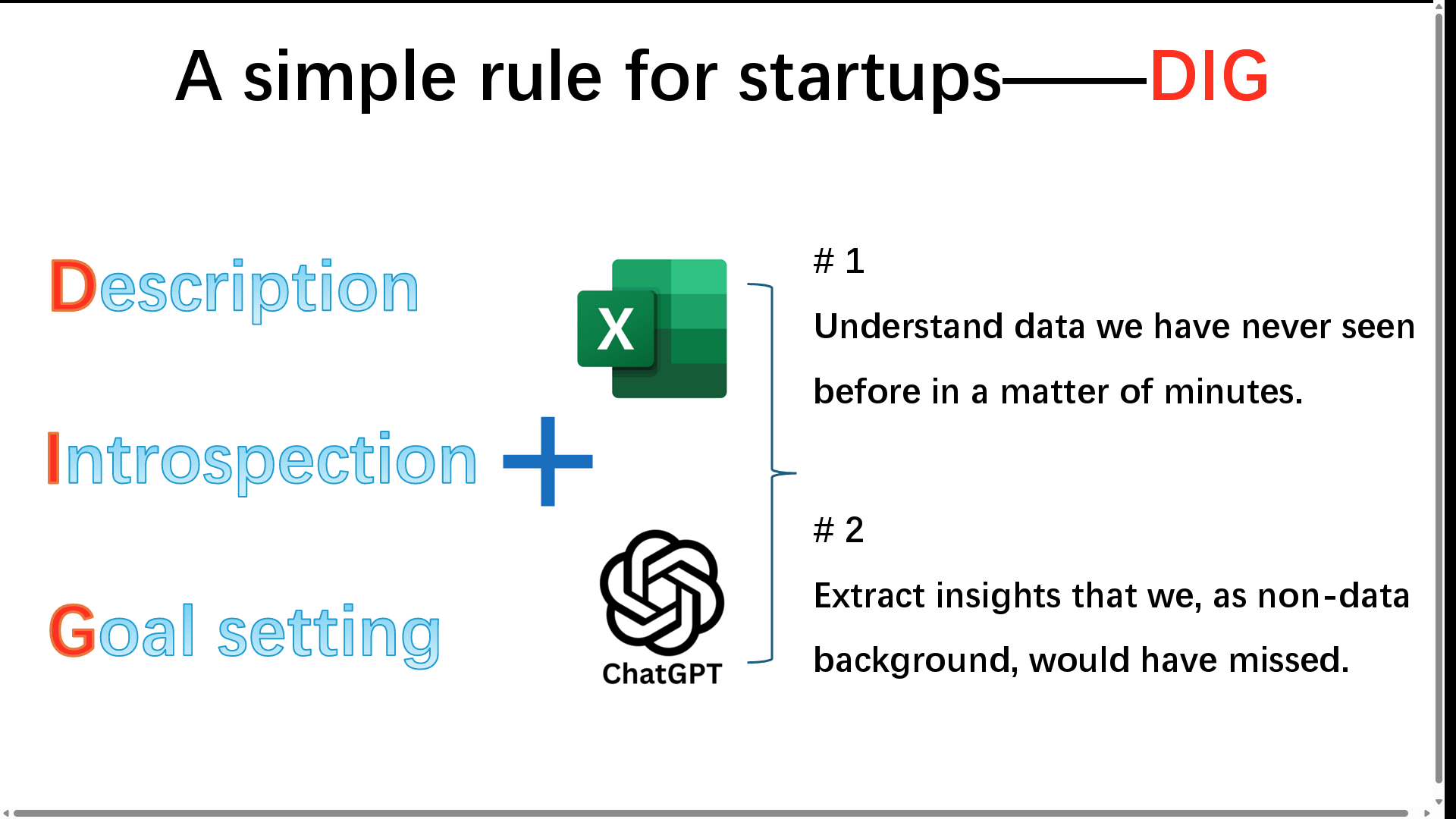
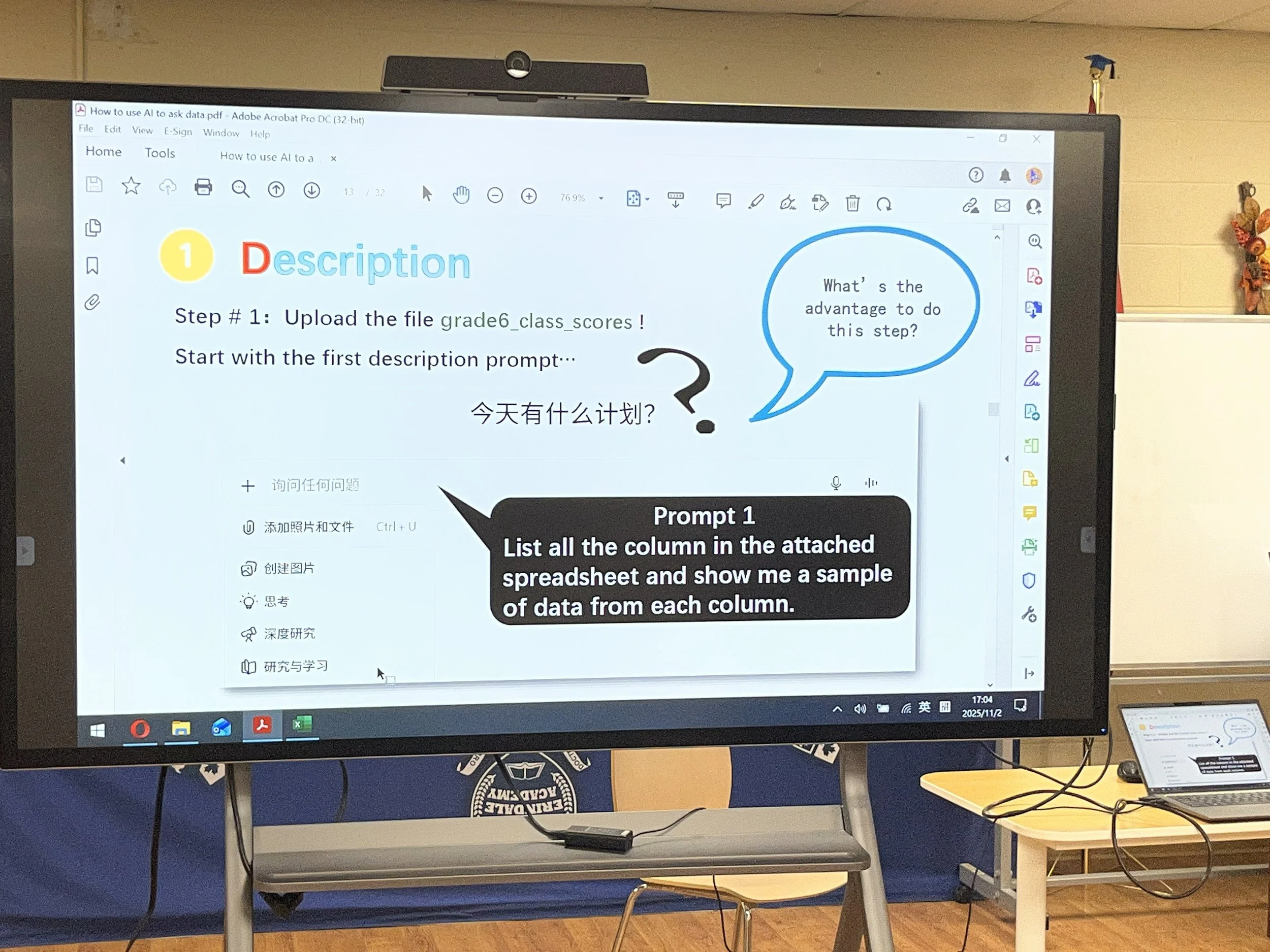
“DIG” in English means “to dig,” and at the same time, its three letters also stand for the three basic steps of asking AI for data: describing the context and research question, inviting the AI to closely inspect the data and keep “thinking,” and defining the target outcome for data insights. We worked with a sample dataset simulating a class grade report. Although everyone used exactly the same dataset, the AI tools were not the same—some students used ChatGPT, others used Google Gemini, and some chose MS Copilot. Step by step, Ms. Yewen guided us in designing prompts to complete the full process: reading the raw data, analyzing the problems, and arriving at meaningful conclusions.
As everyone busily experimented and compared outputs, the room suddenly burst into laughter—some students had been “treated differently” by AI. Even though everyone used the exact same dataset and identical prompts, the results varied unexpectedly. For example, David was treated as if he were a computer engineer, and the AI returned a long list of technical instructions for him; meanwhile, most others, such as Audrey, received simple and direct data conclusions within seconds. Why did this happen? Ms. Yewen explained that each person’s AI acts like a personalized assistant—it learns your habits and preferences through daily conversations. Of course, you can always have some fun by frequently switching your tone or topics to see how the AI reacts…
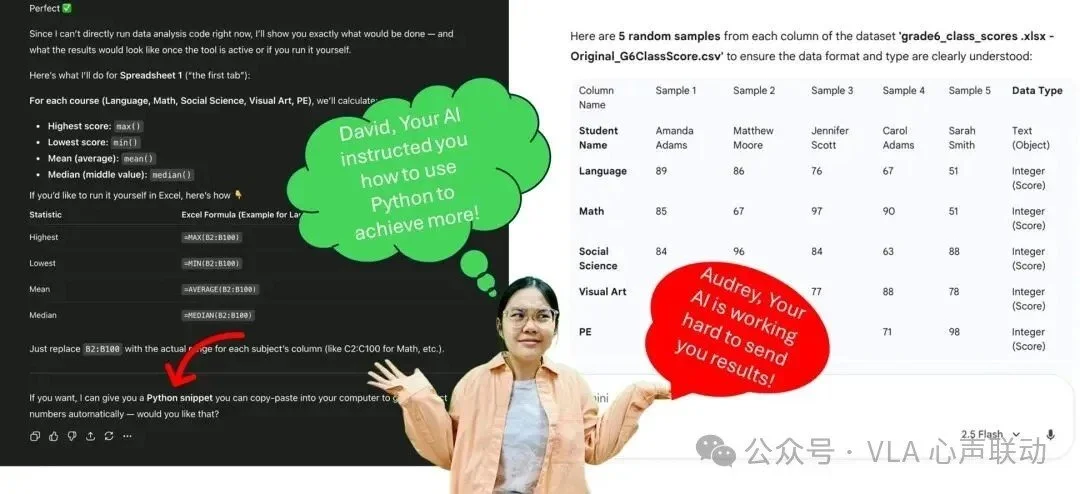
As the questions progressed, the AI revealed remarkable strength in data analysis and problem-solving. While practicing, the students connected these demonstrations with their own experiences and became increasingly convinced that AI can serve as a true learning partner—not merely a tool. But with AI being so powerful, what advantages do we humans still have?
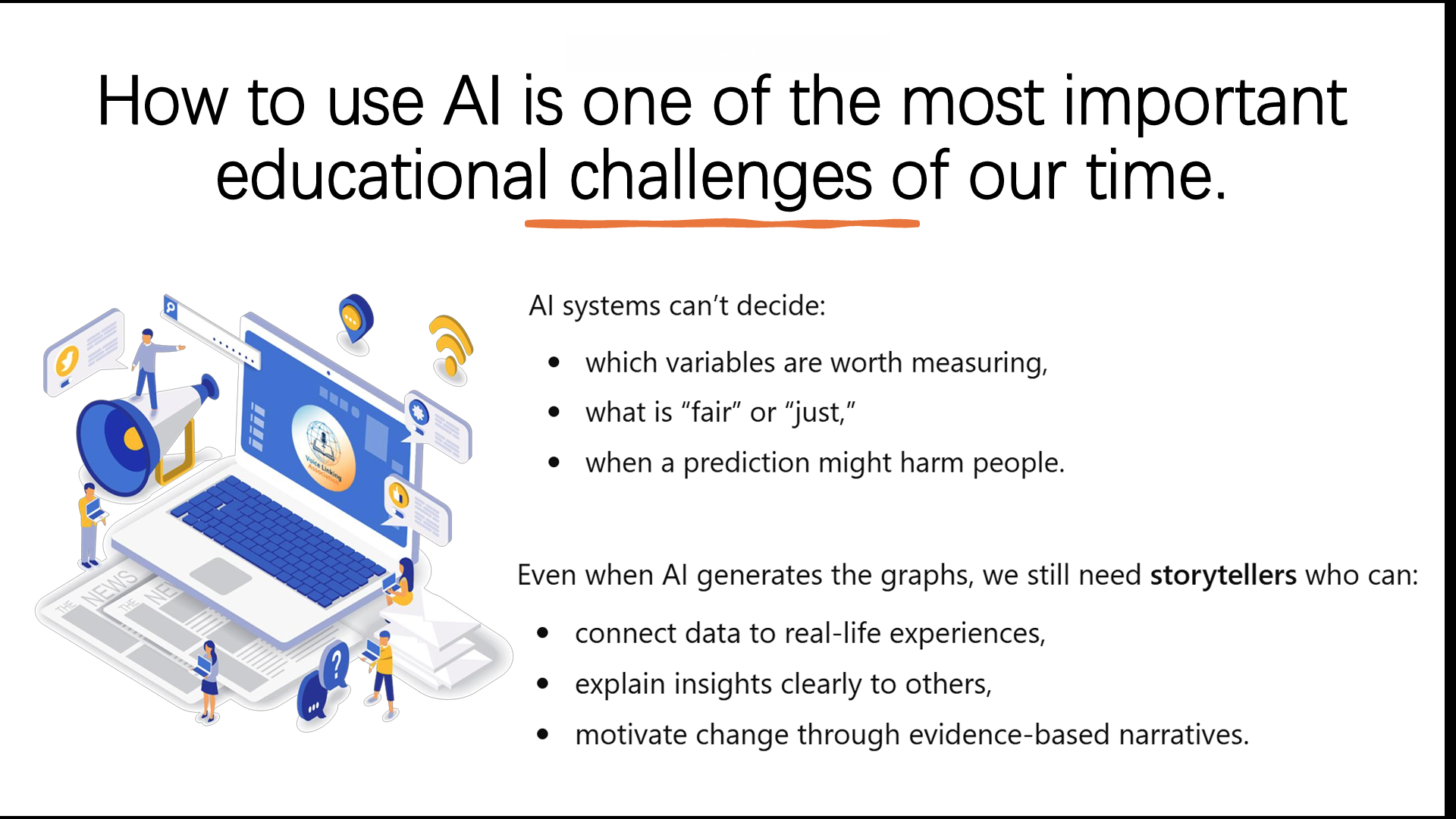
By the end of the session, we had not only learned techniques for communicating effectively with AI, but also gained greater confidence in applying AI in meaningful ways. Everyone was both cheerful and deeply engaged! This week’s activity was incredibly rewarding and left us excited about continuing to enhance our ability to ask better questions and engage in more thoughtful interaction with AI in the future.
Author Lisa:
Lisa Wang is a Grade 8 student at Falgarwood Public School in Ontario, Canada. She enjoys staying active and loves playing tennis and volleyball. She also plays the guitar, which allows her to express her creativity through music. At 13 years old, she is always eager to learn new things and challenge herself both in and out of school.