The Bug World

“All around us, there is a hidden world we almost never detect. Tiny creatures live secret lives right under our noses, in our gardens, and even in our houses(shocking). On November 16th, Frank will be introducing you to the bug world, and how interesting it can be[at times].”
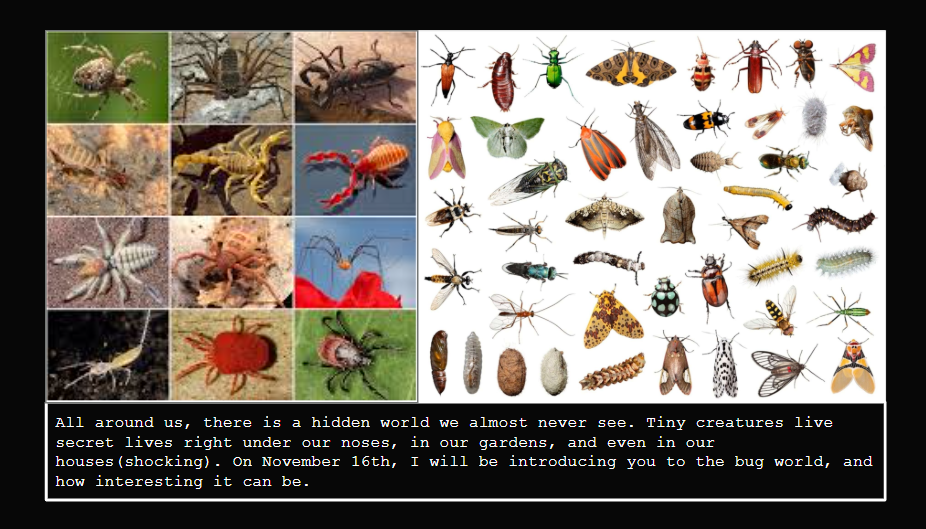
On November 16, 2025, one of our loyal and smart team members–Frank–devoted a massive amount of resources, brain cells, and energy to bring us an 80 slide long presentation on BUGS.
On the big day, everyone arrived at the scene of the presentation fresh and fully prepared, ready to endure the pressure of a long, 2 hour long presentation covering insects, arachnids, and myriapods.
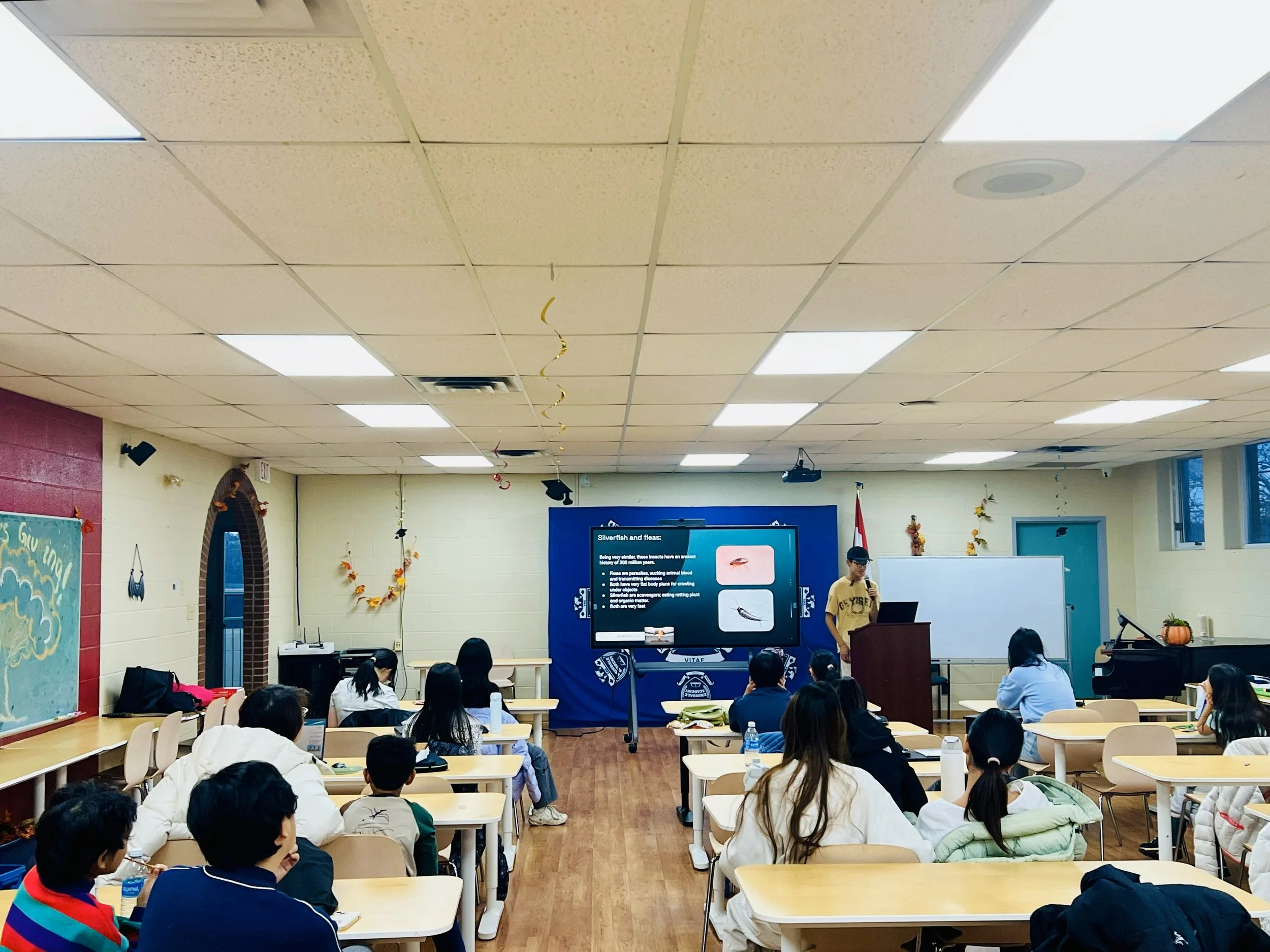
Verifying that all the audience was present and settled, the presentation began.
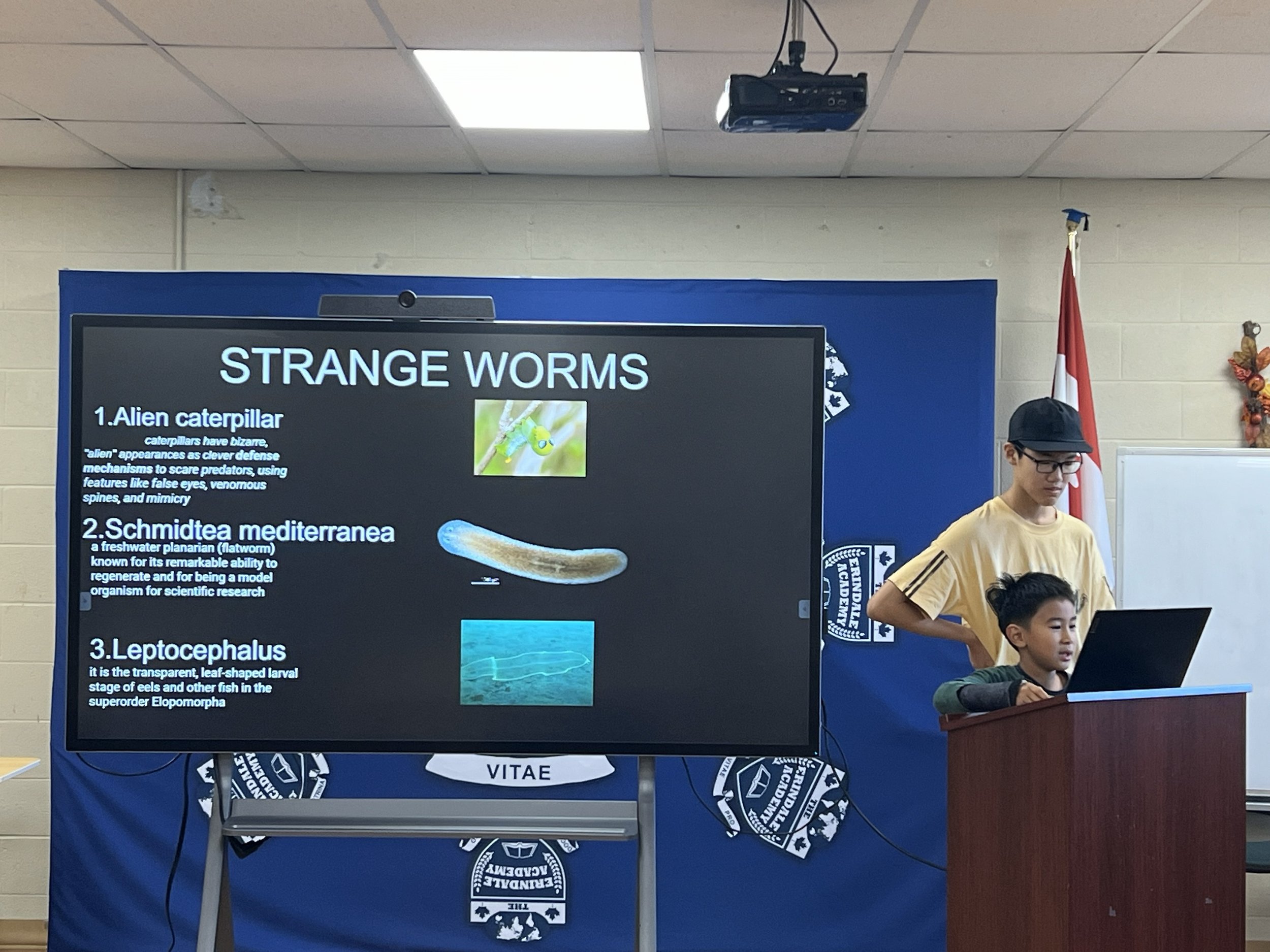
Before the main event, Michael came up briefly on stage to deliver a little presentation about worms.
Micheal gave his best effort, who is the youngest in our club, and even performed well overall orally. There was even a section on edible worms, which captured everyone’s interest.
After his part was over, Frank came on stage for the main part of the session.
First, Frank started off with a concise introduction–what were arthropods, what topics this presentation would cover, even including a bit of humor in a so-called “boredom level indicator” to set the tone. After these brief opening remarks, Frank launched into a detailed, long, and very boring speech about various suborders of insects and their body plans–material that demonstrated exceptional knowledge about scientific concepts.
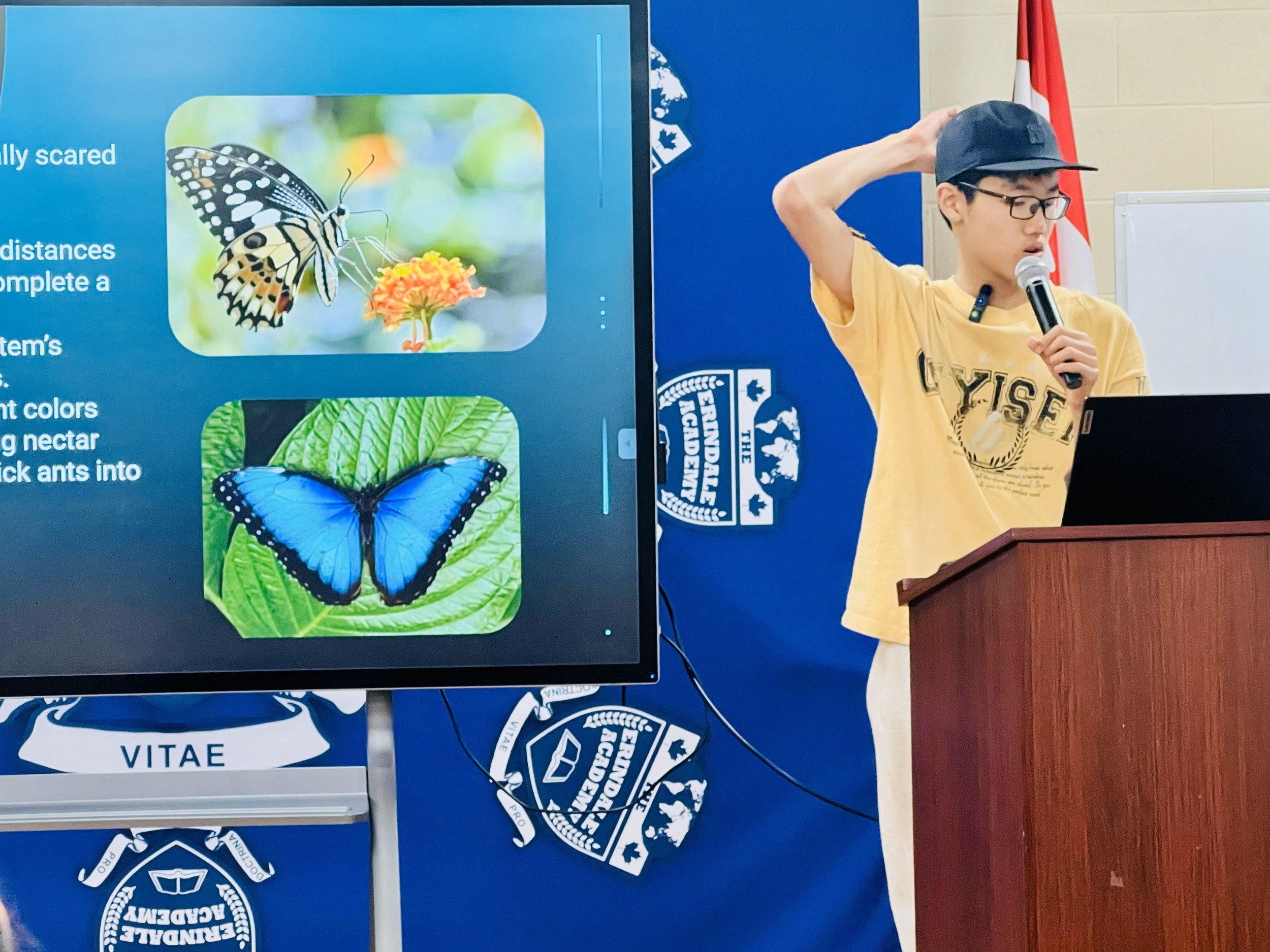
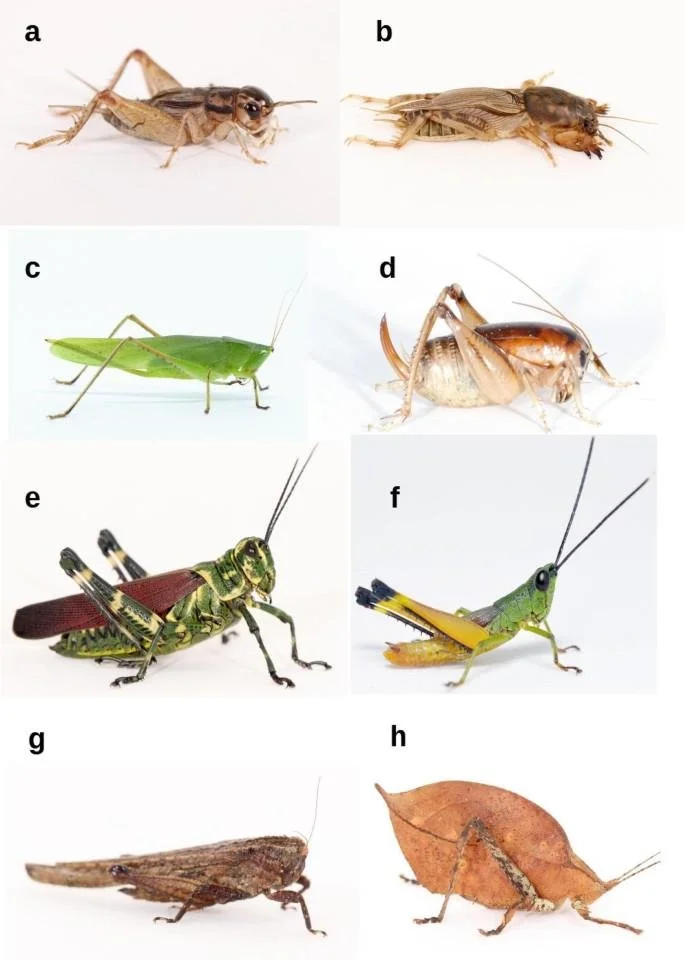
To start off the lecture, there was a session on crickets, katydids, and grasshoppers. Crickets, Katydids, and Grasshoppers of the order Orthoptera are one of the most diverse and common types of insect, serving as prey for many animals and provide a helpful role in breaking down organic matter.
What's special about these insects is that they can actually create sound as mating rituals, either by doing actions with their legs, or by moving their wings.
You can find them on a hot summer’s day by flipping under logs of debris, going to meadows and swinging a net between tall grass to hopefully capture grasshoppers or katydids.
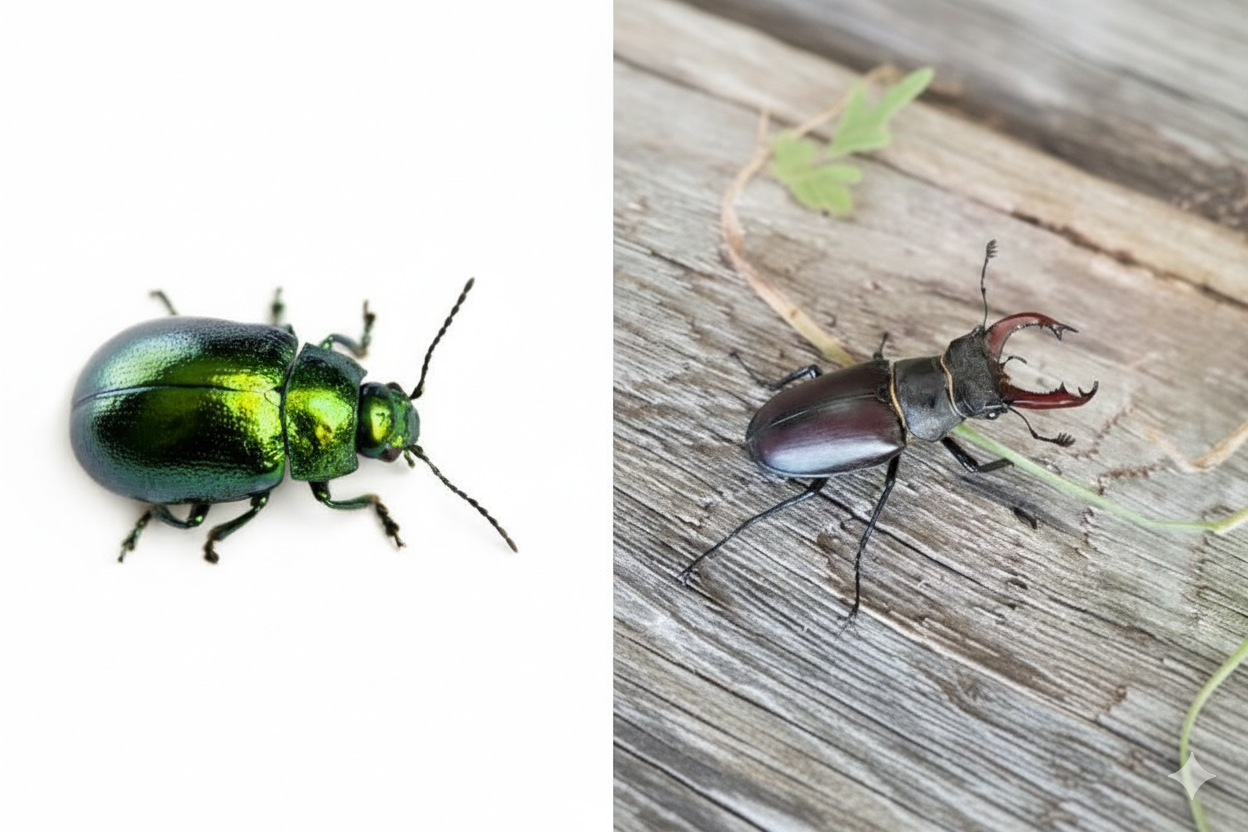
Moving on, there were beetles. Beetles are the most diverse suborder of insects, having over 500000 different species. They come in a variety of colors and sizes; some are metallic green, while others are just a dull brown or black.
Beetles, compared to other insects, have a unique body plan. They possess wings caused by an elytra, but their flying capabilities are very inconsistent due to weight.
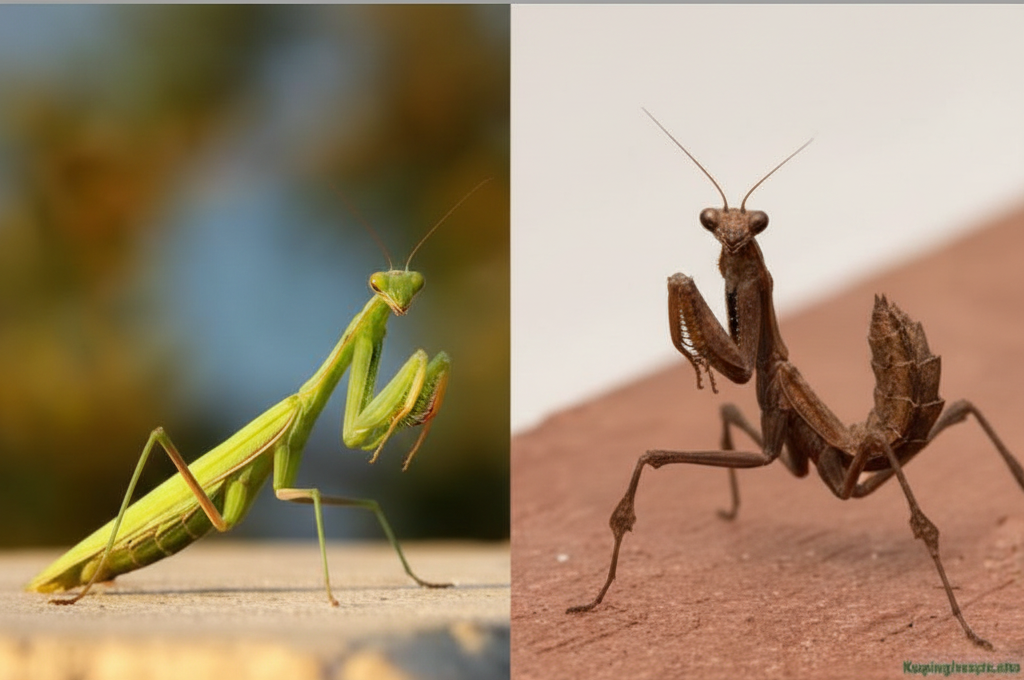
Mantises captured significantly more interest and attention than any previous section mentioned. Mantises are very unique and interesting to watch, as they’re stealthy, camouflaged, and strike faster than the blink of an eye. They are among the best invertebrate predators and will eat anything smaller or relative to their size.
Despite what people think, they actually have more than two eyes, and the little black dot on each eye actually isn’t an eyeball.
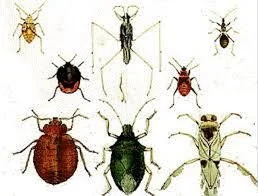
After mantises, true bugs, though didn’t capture as much attention, were equally as interesting. In this section, Frank covered assassin bugs, stink bugs, as well as aquatic bugs.
These all share some common traits:
A proboscis for sucking fluid from either plants or animals
Shaped like a shield→very flat
Inconsistent flying capabilities
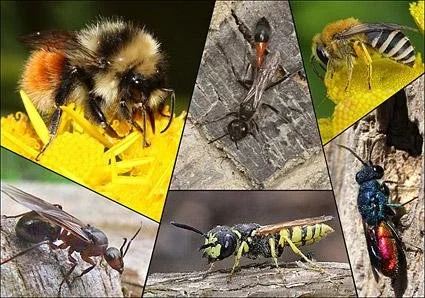
Arguably the most eyecatching and interesting part of the “Insects” section was ants, bees, wasps, and hornets, which captured and invoked interest among the audience.
They are among the only arthropods to collaborate effectively, forming a huge colony with a common ancestor being the queen.
They communicate, coordinate, collaborate, and even launch german WW1 stormtrooper tactics→having a small team of ants run around the main defense line and into the enemy colony to flank the main force, with multiple ants teaming up on a single enemy and drawing attention away from the main battlefield so that a larger force of ants can break through→using chemicals called pheromones.
Except for a few species, almost all of them possess a stinger and venom, with the most extreme species having actually killed people in recent history.
They are key factors of the ecosystem, getting rid of pests and pollinating angiosperms[flowering plants]
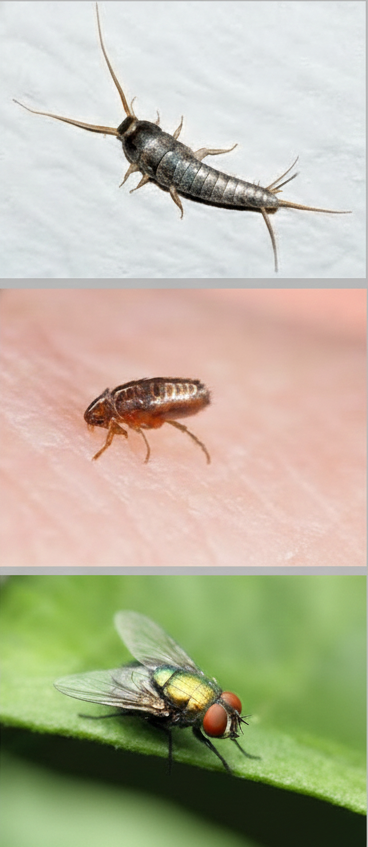
Finally, the session ended with a brief section on cockroaches, silverfish, fleas, as well as other minorities of insects. They all share a common trait: they are among the most ancient terrestrial animals on earth, and have extraordinary adaptation capabilities.
After this was all over, the audience breathed a huge sigh of relief upon realising that this was all that was going to be covered for today. Throughout the slideshow, Frank not only delivered the content with clarity but also answered all the questions with accuracy.
Realising the need for a little bit of interaction after a long lecture, there was even a little pop quiz on random facts included in the presentation.
Each person received a score based on whether their answers were correct, and the person who got the most right was even promised a prize the following week. Good job to Mona Liu for acing the quiz.
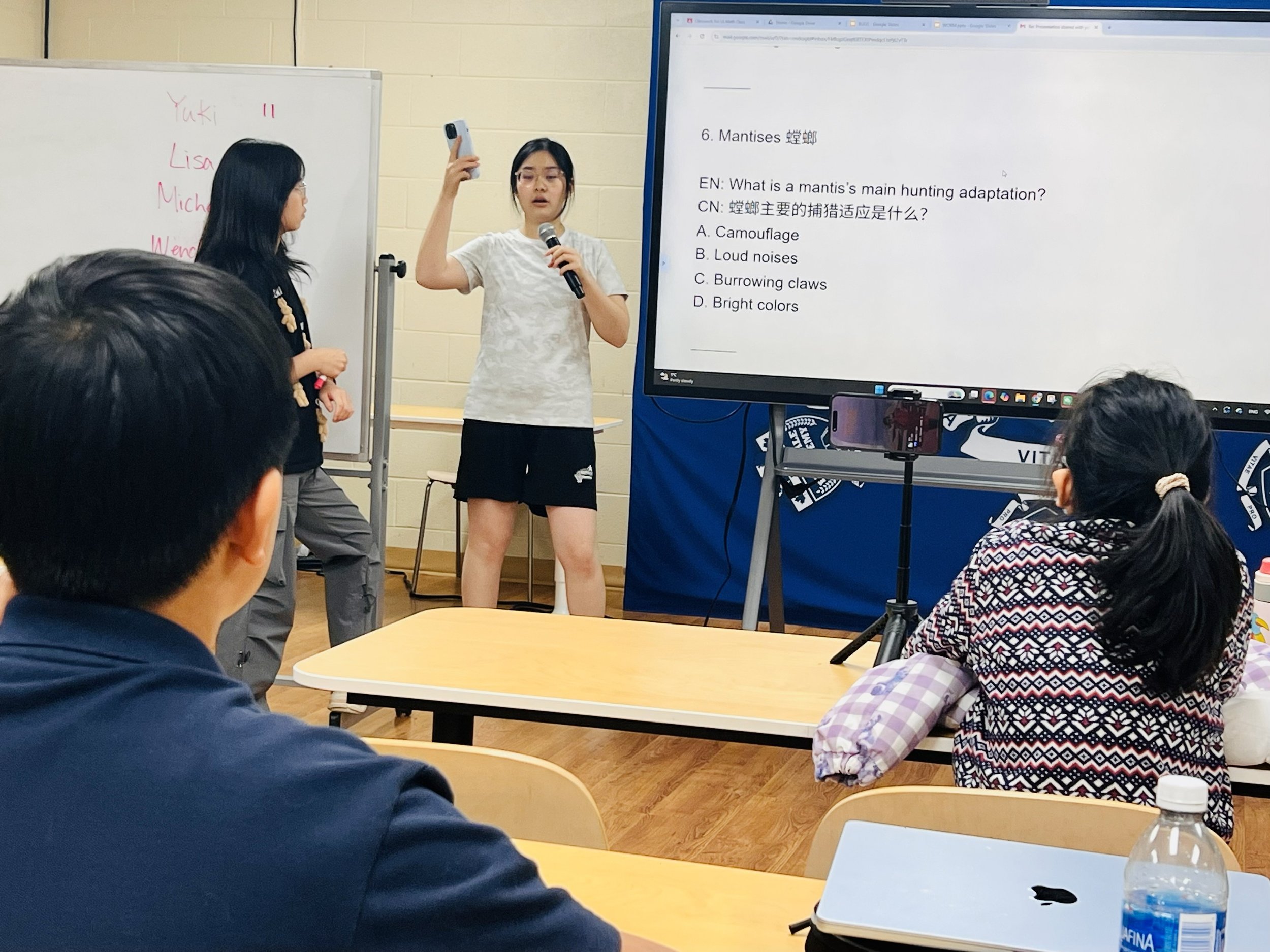
Although only the INSECTS section was completed in time for this session, the depth of content and the clarity of structure already demonstrated remarkable knowledge and scientific enthusiasm.
Time flies when you’re having fun, and soon, the session came to an end. Everyone left the scene of the presentation deep in thought and already excited, waiting for the arrival of part 2.
PS:Everyone howled with laughter when I speak Chinese, especially David, whom I thought was my friend until then
Author Frank:
Frank Ding is a grade 8 student in Pilgrim Wood Public School. He enjoys Stephen Hawking's A Brief History of Time, exploring topics related to quantum computing, playing basketball, and walking the dogs in his family.
