A Talk on Modern Communication Technology: Why are TV Towers so Tall?
On-spot record by Wenqi Xiao
On Feb 1st, 2026, Ms. Yewen led a discussion about modern communication technology. The entire session revolved around a simple yet thought-provoking question: Why are TV towers so tall?
By exploring this question, we not only understood the physics behind it, but also saw how technology evolves under social needs, and began to reflect on how communication continuously reshapes our way of life.
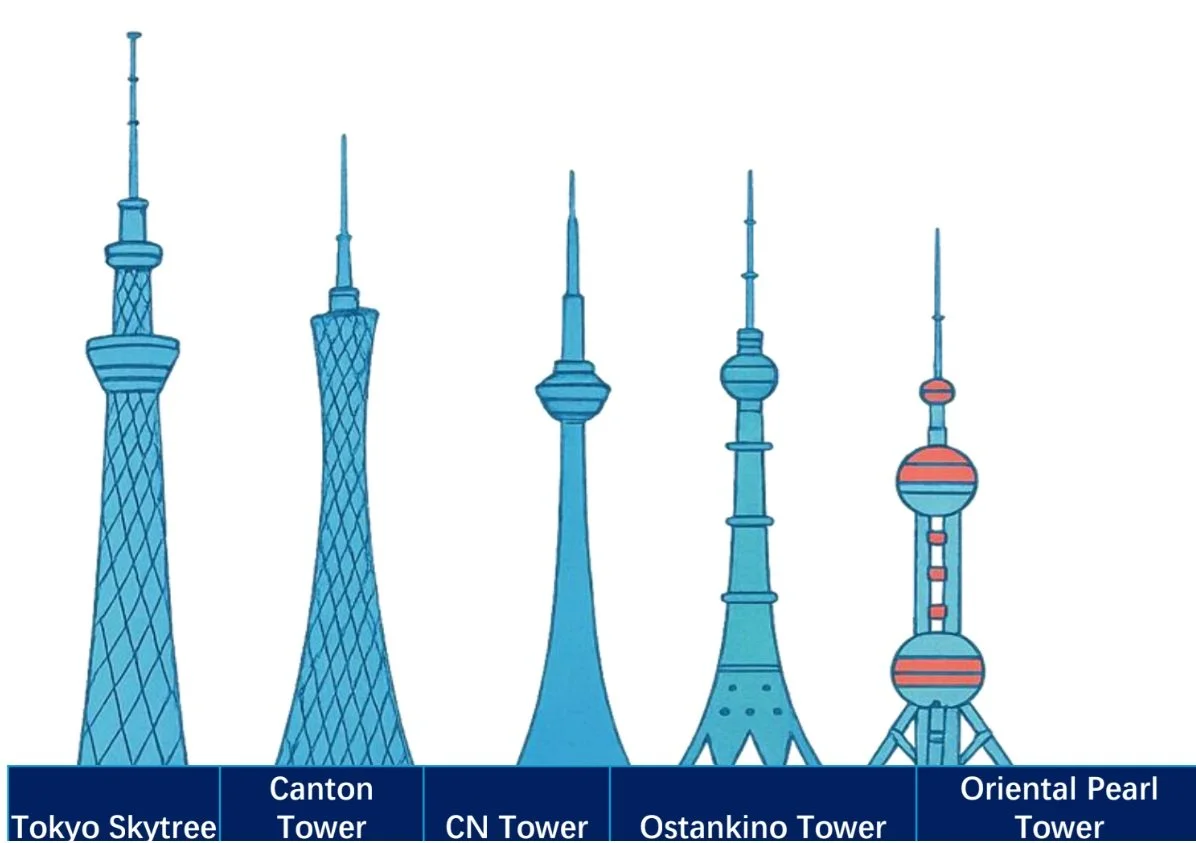
The CN Tower in Toronto, built in 1976, ranks as the third‑tallest TV tower in the world.
The first part of the session did not jump straight into technology, but instead returned to a fundamental question: What is communication?
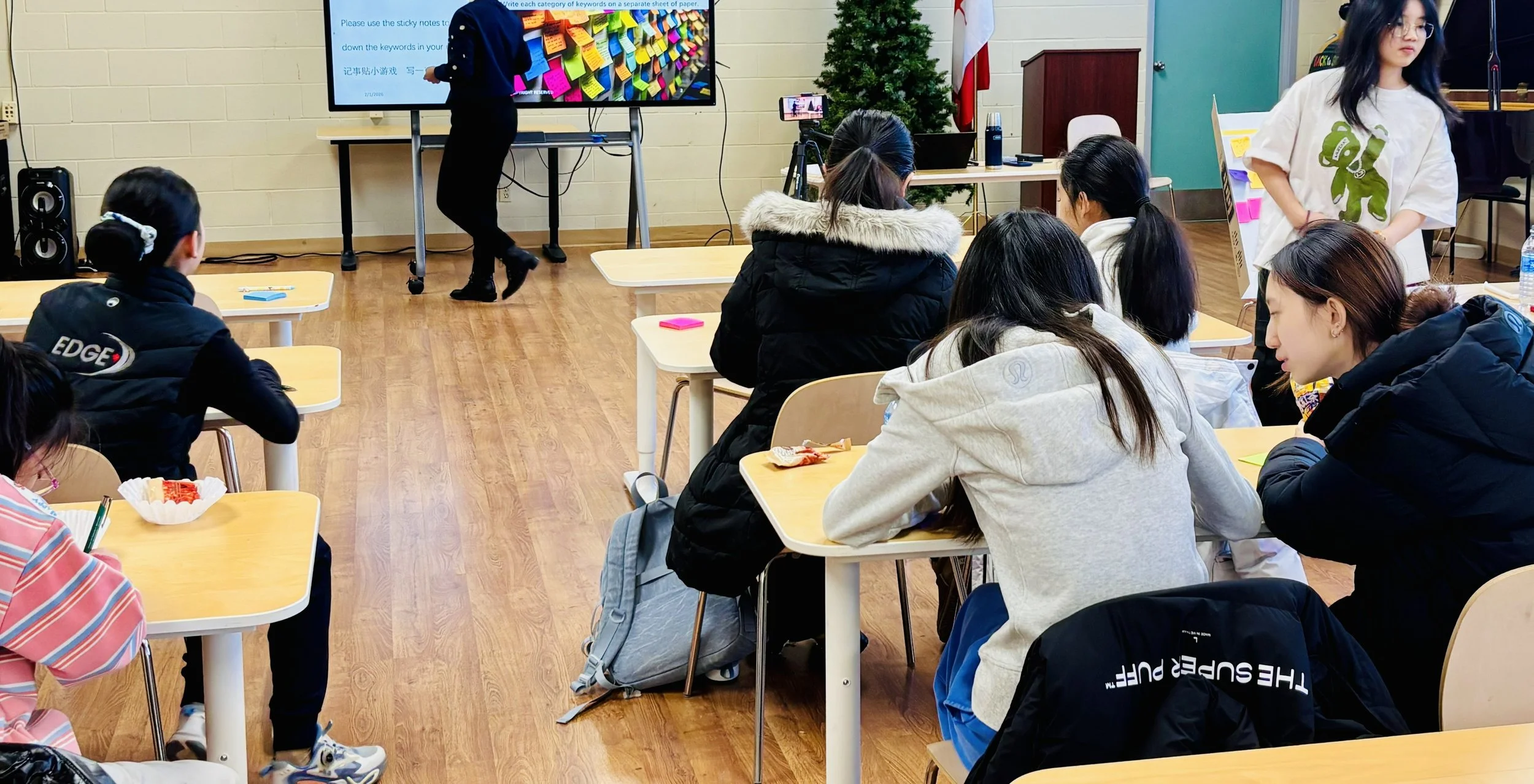
Boys and girls wrote down keywords on sticky notes: expression, information, relationships, signals, language, emotions, silence… These words were placed on the whiteboard, then reorganized, categorized, and summarized. Through this process, our understanding of communication gradually became clearer.
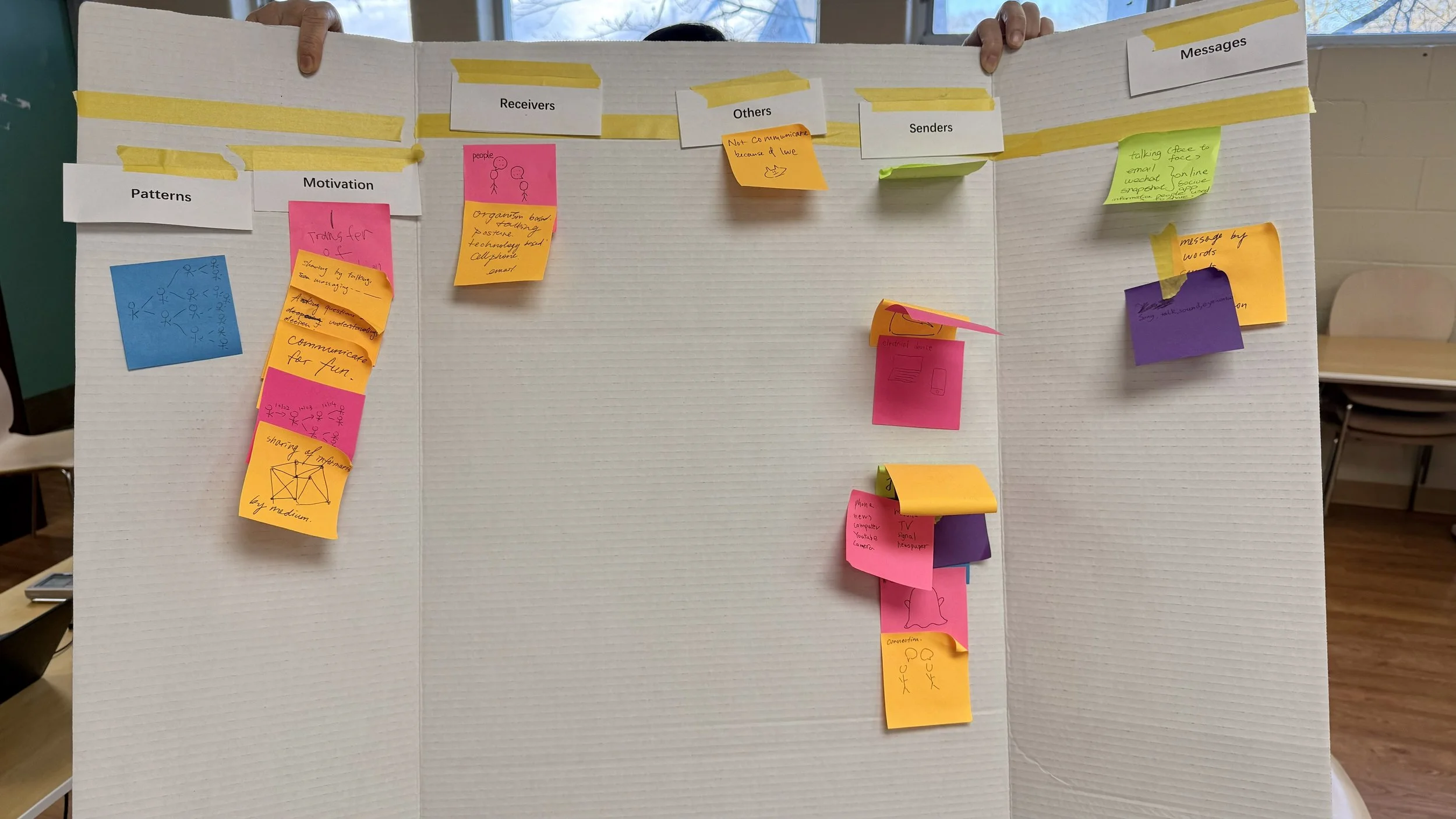
Boys and girls wrote down keywords on sticky notes to find out the concept of communication
Communication has many motivations and forms. We use it to share ideas, express emotions, and build relationships. Sometimes communication does not even require language—it can be drawings or even animal sounds. At its core, communication exists because humans cannot live in complete isolation. It is a social need and a process of sending and receiving information.
We also identified three key elements of communication: the sender, the message, and the receiver. All three are essential—without any one of them, communication cannot take place.
Based on these elements, we further discussed: Must the sender always be human? Can animals, natural phenomena, or machines also send information? Does information have to exist in language form? Through continuous questioning, we developed a clearer idea: communication is the process of transferring meaning from one side to another.
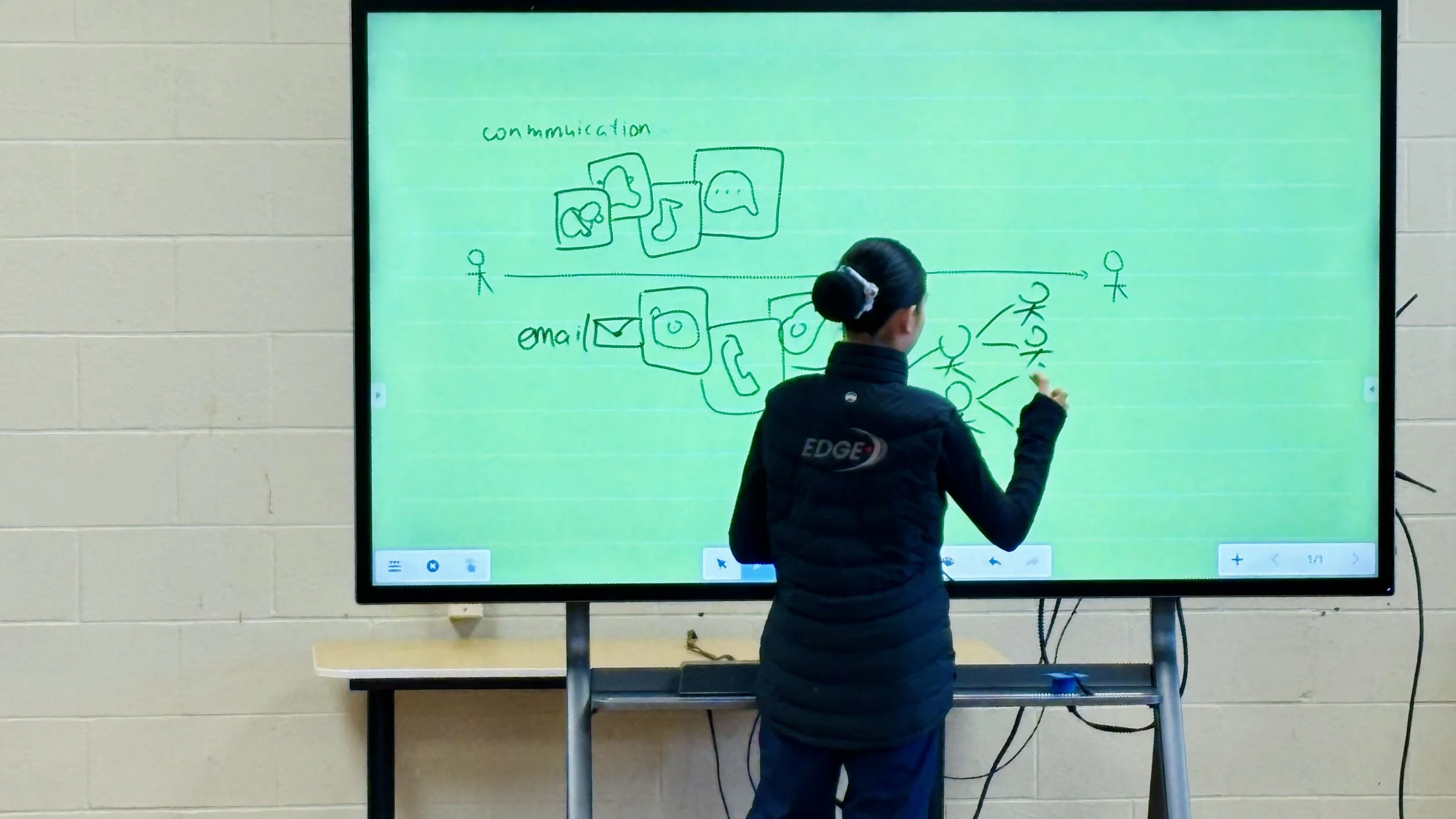
Based on the words we mentioned, Terra eagerly sketched various communication‑related things on the digital screen.
After understanding the basic concept of communication, we shifted to the technical level: how does technology help information travel across distance?
We reviewed the development of communication technologies along a timeline:
Telegraph (1837): transmitted text over long distances using electrical signals—the first form of instant long-distance communication.
Telephone (1876): enabled real-time voice communication, moving from text to sound.
Email (1971): allowed messages to be sent through the internet, making communication cheaper and more convenient.
Text messaging & mobile communication (1990s): made communication possible anytime, anywhere.
Video calls & mobile internet (21st century): enabled real-time audio and video interaction, making communication more multimedia-based and global.
With the spread of radio and television, communication evolved from wired to wireless, and from point-to-point to mass communication. Each advancement improved efficiency and reach. This is not magic—it follows the laws of physics.
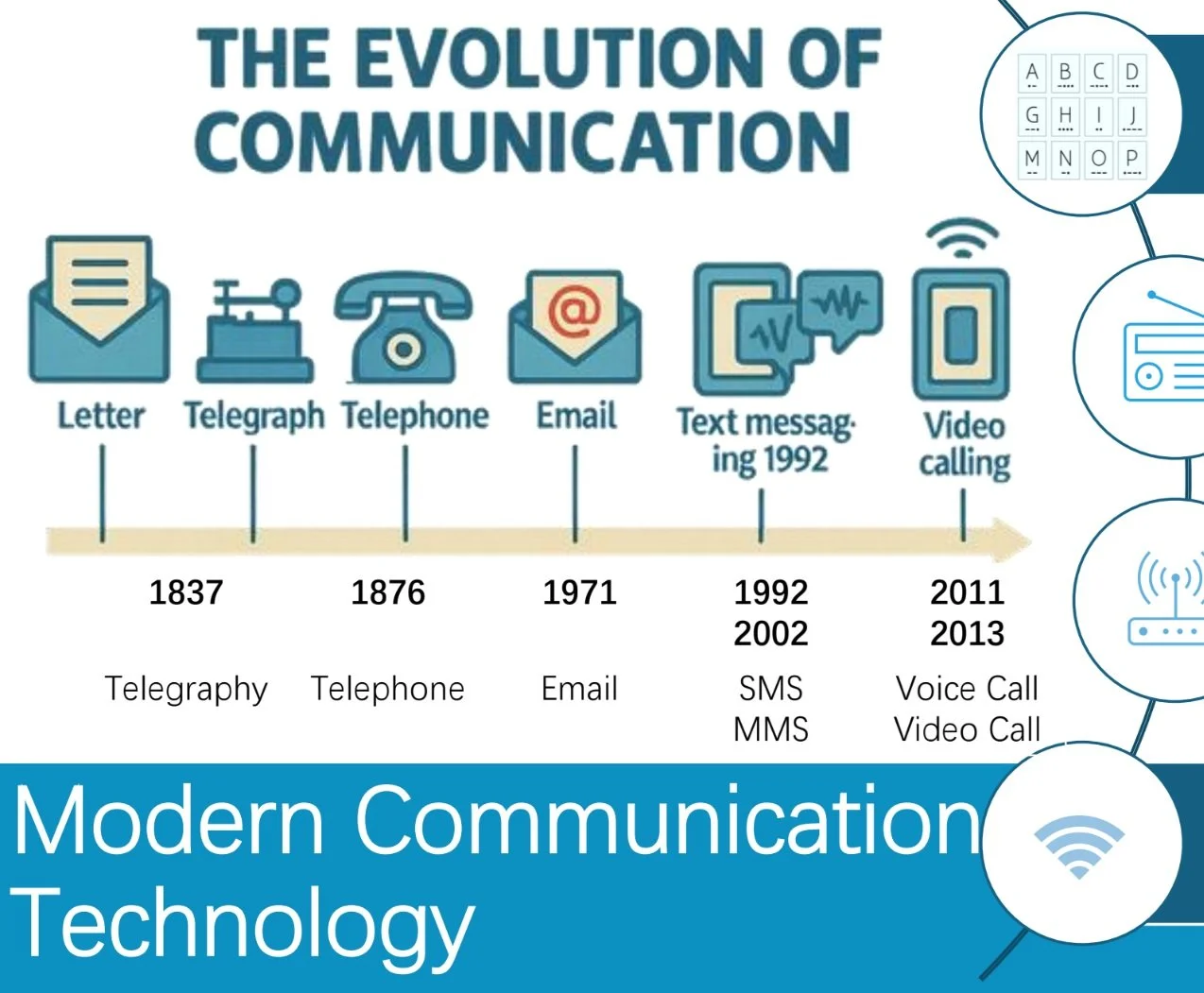
We reviewed the development of communication technologies along a timeline.
When radio became a major communication method, a key question arose: how can signals cover a larger area?
By comparing several towers, we developed an intuitive understanding of their height.
Using a flashlight analogy and textbook knowledge, we understood a key principle: radio waves travel roughly in straight lines, but the Earth is curved and buildings block signals. If a tower is too low, signals are obstructed. The higher the tower, the wider the coverage and the lower the energy loss.
Taking the CN Tower as an example, its construction was closely related to signal obstruction caused by skyscrapers. Therefore, its height is not for appearance, but the result of physical laws and urban structure.
Video editor:
Terra Liu. She is a grade 7 student in Heritage Glen Elementary School who loves figure skating and sewings.
As cities expanded, ground-based towers alone were no longer enough for global communication.
We discussed the Starlink system, which uses many low-Earth orbit satellites to provide global coverage. Communication shifted from single towers to distributed networks, from centralized to multi-point connections.
This not only expanded coverage but also transformed the logic of information infrastructure, allowing remote areas to access the internet.
When technology matures, it is turned into products that serve people. Through interviews with older generations, we found communication used to be inconvenient—letters were slow, phones required waiting, and telegrams were rarely used.
Businesses identified opportunities from these inconveniences and turned technology into solutions. Using an “opportunity map,” we analyzed problems in communication—for example, the need for remote collaboration led to video conferencing.
In the final part, we extended the discussion to artificial intelligence.
An intelligent system can be divided into perception, decision-making, and action. When machines not only transmit information but also make decisions, communication systems begin to merge with intelligent systems.
This raises new questions: which jobs will be affected? Which skills are hard to replace? These are questions worth further exploration.
We are grateful to Ms.Yewen for leading us through a thorough and exhilarating discussion. During this discussion, each of us nearly ran out of brainpower as we were constantly brainstorming. We realized that the phenomena around us, which seem easily accessible, are actually the result of cumulative progress in human technology. A simple definition of "communication" or a tower that has stood in the city of Toronto for fifty years is backed by the efforts of past generations. Now, satellite communication, product innovation, and artificial intelligence are the areas of innovation left for our generation.
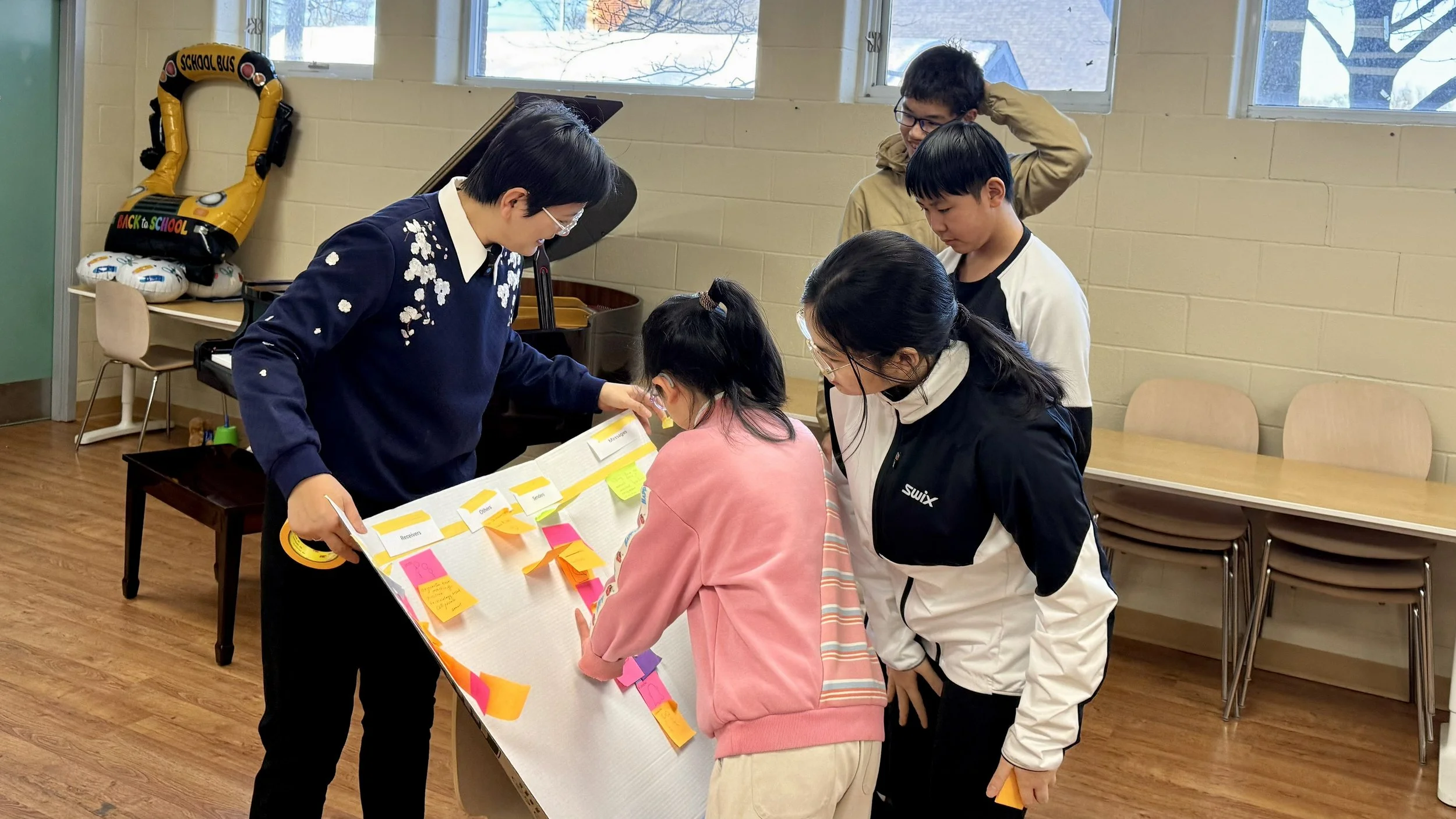
We experimented with how to categorize communication‑related items and distill their core concepts.
Through this process, we not only understood why TV towers are tall, but also how communication technology continuously reshapes human connections.
From TV towers to satellite networks, what we see is not just technology itself, but how it gradually transforms the world.
Author’s Bio
Wenqi Xiao is a student at Abbey Park High School in Ontario, Canada. She has a strong interest in music, especially playing the cello, which allows her to express herself and explore her creativity through classical and modern pieces. Through music, she has developed patience, focus, and a deeper appreciation for the arts. She is eager to learn new things and enjoys challenging herself both academically and creatively.
Short Report by Frank Ding
On February 1, 2026, VLA officially launched its academic activities for the new year. The lecture, delivered by Ms. Yewen, focused on the history and development of communication technology, while guiding participants to explore a key question: “Why are TV towers built so tall?”
On the day of the event, participants arrived with enthusiasm. Before the event began, there was a brief period of interaction, creating a relaxed and organized atmosphere. As the lecture progressed, everyone became more engaged and developed a clearer understanding of how communication technology has evolved over time.
During the lecture, Ms.Yewen not only explained the development of communication technology in a structured way, but also encouraged critical thinking through questions. In the interactive session, participants actively shared their ideas and expressed their perspectives from different angles, making the discussion lively and engaging.
Afterward, participants reflected further on the topic, connecting the height of TV towers to signal transmission and real-world applications.Through discussion and exchange, they deepened their understanding while also improving their communication skills.
At the end of the event, everyone reviewed the key points of the lecture and gained a more comprehensive understanding of communication technology. This activity not only broadened participants’ horizons but also sparked greater interest in scientific exploration.
Author’s Bio
Frank Ding is a grade 8 student in Pilgrim Wood Public School. He enjoys Stephen Hawking's A Brief History of Time, exploring topics related to quantum computing, playing basketball, and walking the dogs in his family.
